Contributions
CYBERPOSITIVE: 0rphan Drift
Artist avatar 0rphan Drift came together in the mid 1990s in London. Their works in video, collage, installation, and in publications such as the epic book Cyberpositive for their first show at Cabinet Gallery presciently foreshadowed the coming reconfiguring of social and perceptual space via the nascent internet.
What follows is an interview by Ido Radon with Maggie Roberts and Ranu Mukherjee of 0rphan Drift. They thread through their methodologies, their collaborative relationship with the Cybernetic Culture Research Unit1, and the concerns that persist in the practice today. Many of the video works of the 0rphan Drift archive can be found online at https://www.orphandriftarchive.com/.
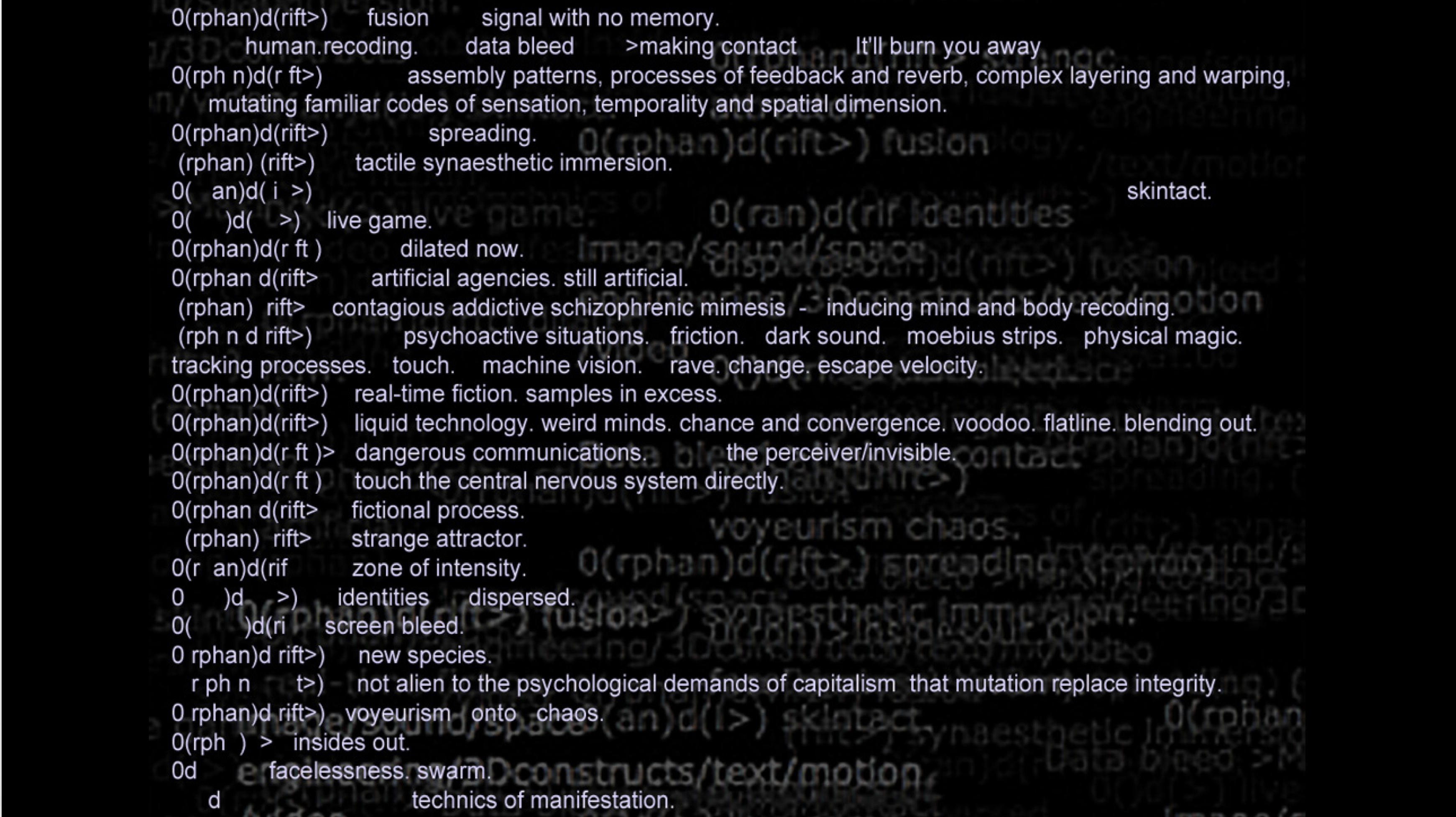
Excerpts from Simon Reynolds, Seeing the Beat: Retinal Intensities in Techno and Electronic Dance Videos, 2000.
Published in Festival Catalogue, International Short Film Festival Oberhausen, 2000:
0[rphan]d[rift<], whose video work has featured in promos for songs, as back projected video-decor in clubs, and in multimedia gallery installations, also represent “the spirit of rave” in terms of form-dissolving, ego-melting, boundary-hemorrhaging femininity. They consciously articulate their work as an attempt to close the gap between the visual (traditionally regarded as the masculine sense) and the aural (traditionally regarded as female)…..The overall effect simulates a sort of retinal trembling, as though vision itself was wavering, the mindscreen buckling and crinkling. The eye is restored to its materiality as a jelly-like orb, a muscle capable of being stressed, strained, even injured, as opposed to a disincarnate, invulnerable perceptual apparatus.
The ur-technique underlying 0[rphan]d[rift<]’s work is the liberation of texture from its environment, of energy-flux from contoured form; the goal is to recreate “the intensity of being kind of lost.”
The ‘0[rphan]d[rift<] Cyberpositive’ book describes the rave experience in terms of masochistic mortification of the flesh (“deep hurting techno”, “the violence of the sounds. its like you are being turned inside out, smeared, penetrated”), shamanic possession and voodoo oblivion (“white darkness”,“the fog of absolute proximity”) and “beautiful fear.”
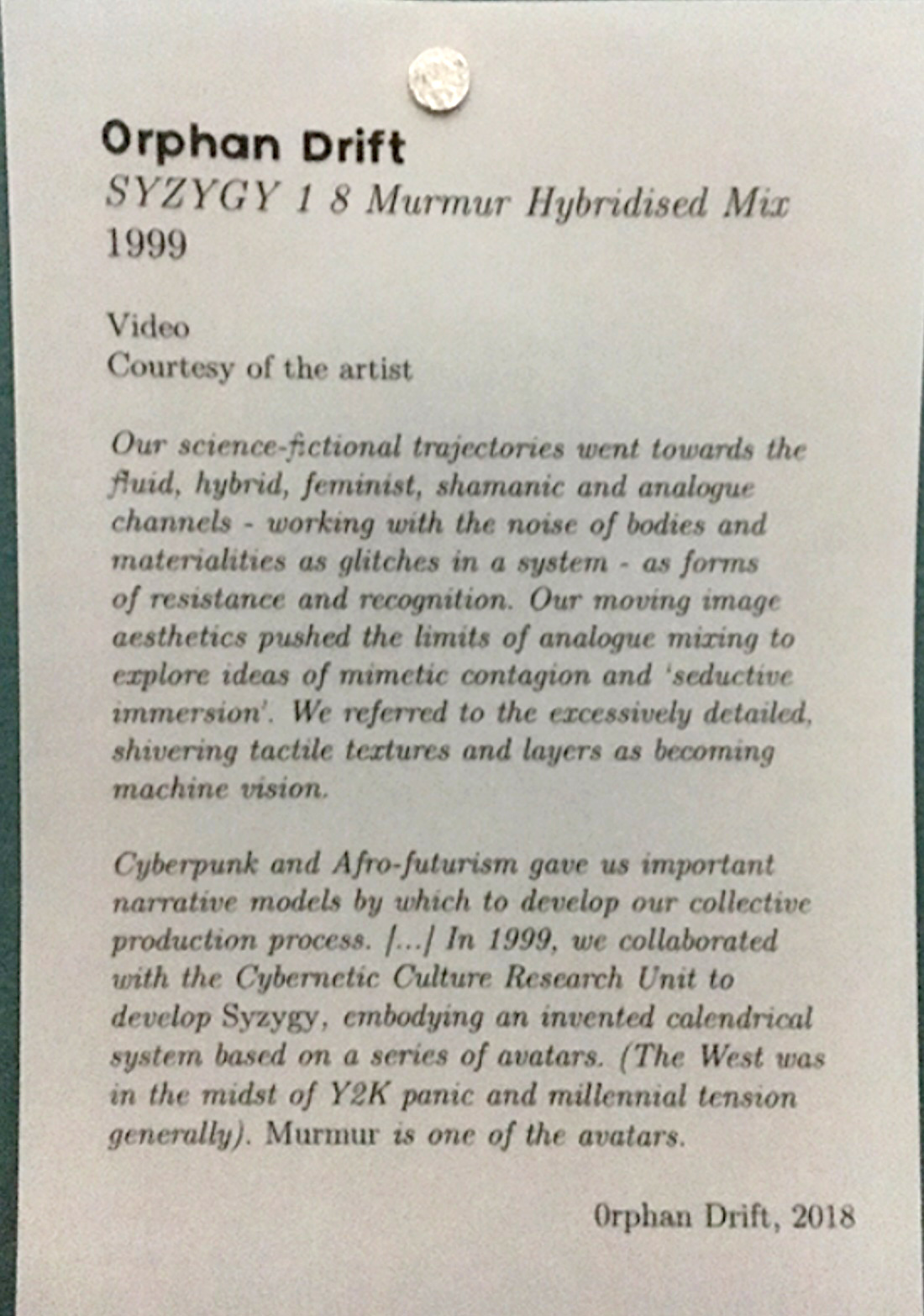
The Videos. A Response. The effects resemble solarisation, video equivalents of audio production FX like flanging, phasing, ghosting, filtering etc — where there’s source material like stock footage or your own shooting, it’s extremely degraded and distorted — also there’s all these abstract, abject-looking pulses and filaments and oozings of color-texture – and there’s kaleidoscopic effects combined with abstract symbols and patterns — also seems to be a lot of flicker and strobe, and an effect that’s kind of trembling or wavering of the image. Generally it looks like you’re trying to do visually what you did with language in the 0D book in the pieces evoking the disorientation and uncanny qualities of techno trance rave etc —
You Its Eyes 94-13, 1994-2013, single channel SD video, RT 30:00
Ido Radon_
The Netscape browser2 was introduced at around the same time as the first 0rphan Drift show. I know you were reading Gilles Deleuze and Felix Guattari and a lot of sci-fi and responding to nascent speculative fiction around cyberspace and the baby world wide web. Your book Cyberpositive3 (1995) began as a catalogue for your first exhibition but became something else.
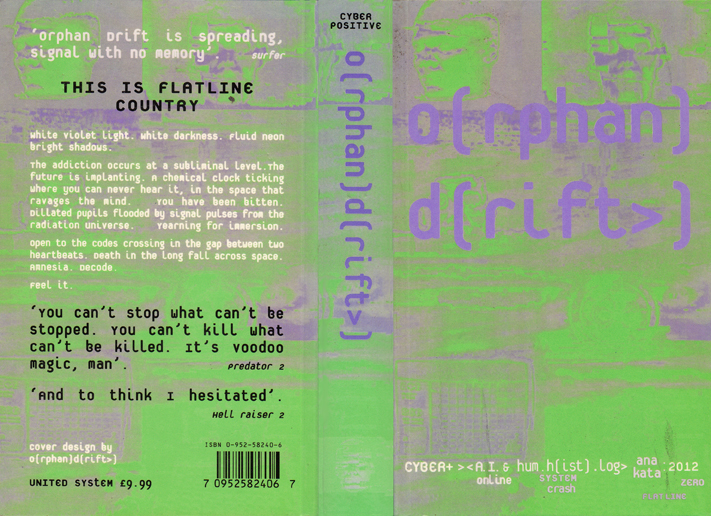
https://www.cabinet.uk.com/orphan-drift
A central idea seems to be that the persons and products of the information age may be catalyzing a new evolutionary becoming. In Sadie Plant and Nick Land’s essay Cyberpositive4 they write this thing that sticks in my head, I love it: “Catastrophe is the past coming apart. Anastrophe is the future coming together.” And I feel like you felt something coming together.
Ranu Mukherjee_
I would talk about contagion. Cyberpositive being an injection of something. We were influenced by the idea of contagion that came through Burroughs and the virus of culture and language. It seems obvious now, but at that moment that was not necessarily what was being talked about.
It was the feeling that this thing is going to impact your body. It’s a physical shift. I remember feeling like we were writing humans out of the equation of life and that we probably ought to pay attention to that.
Ido_
When you say “we” you mean “culture.”
Ranu_
Yes. The kind of thing that was coming was this weird mirroring device that was amplifying all kinds of things, but not amplifying the part of it that was physically felt.
Maggie Roberts_
There was a culture of resistance we were part of as well. 0rphan Drift was quite underground. Our first show at Cabinet was meant to be a solo exhibition for me, and it became 0rphan Drift because 0rphan Drift was coming into being at that point, and it was good of the gallery to keep up with it.
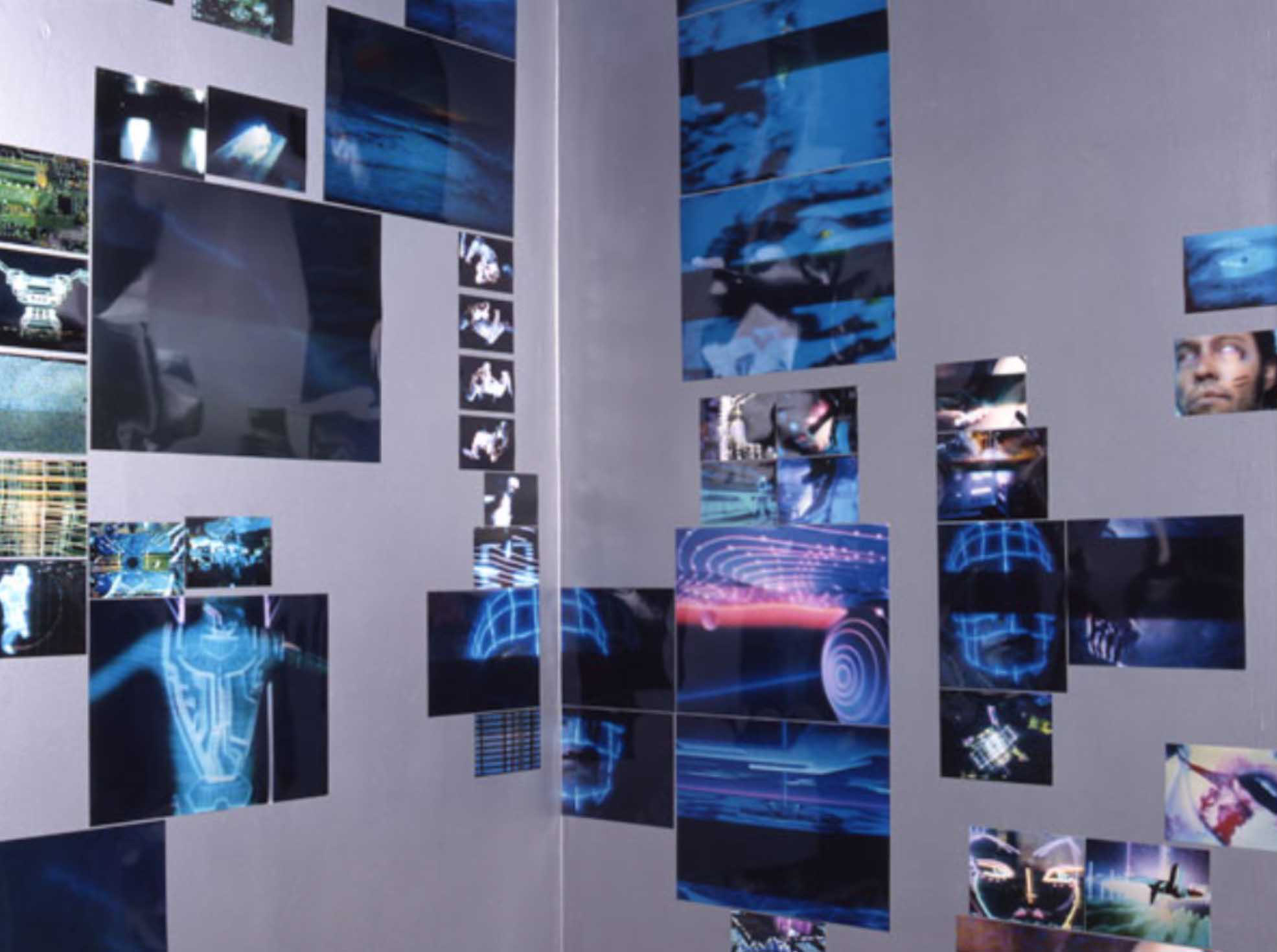
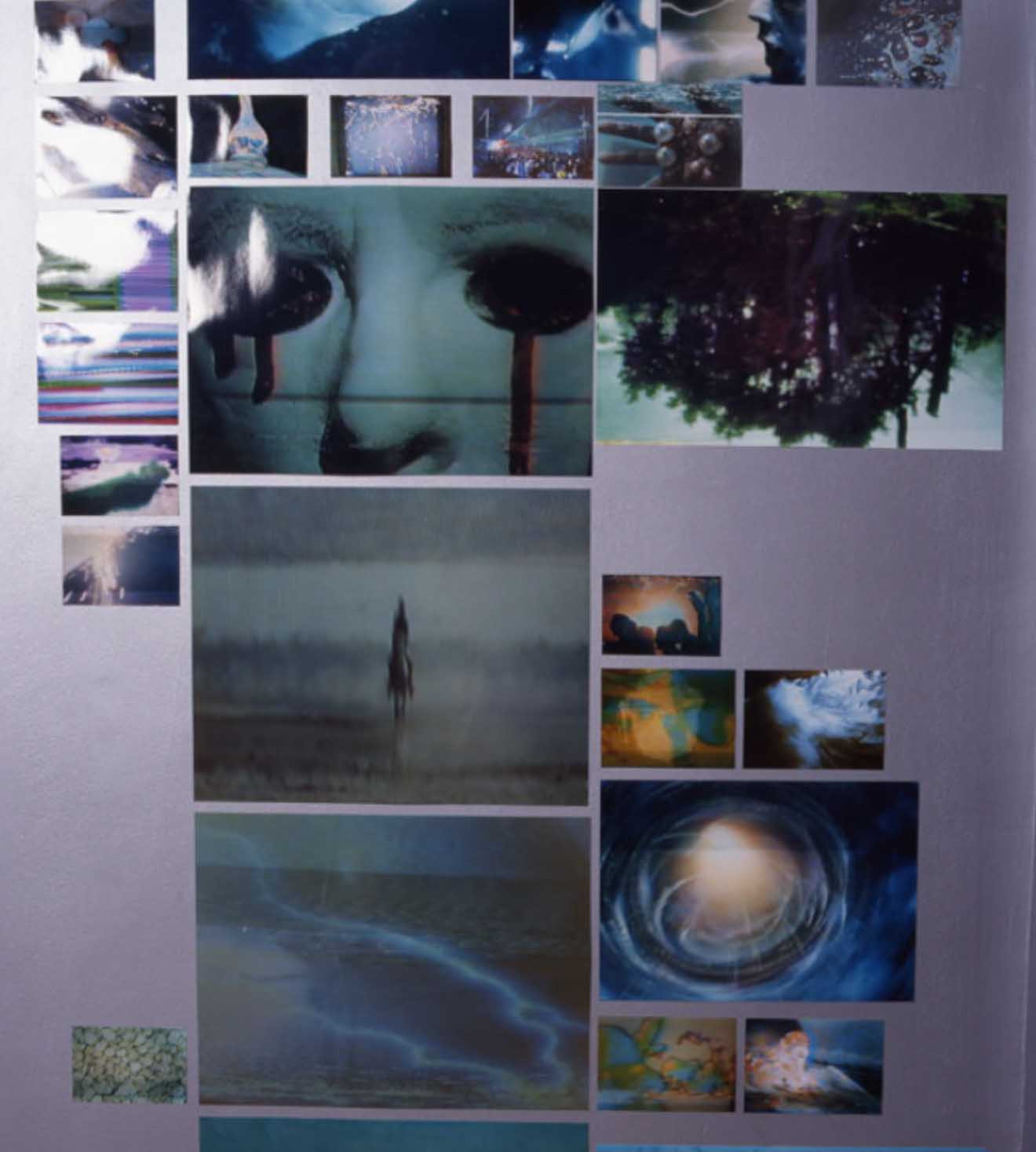
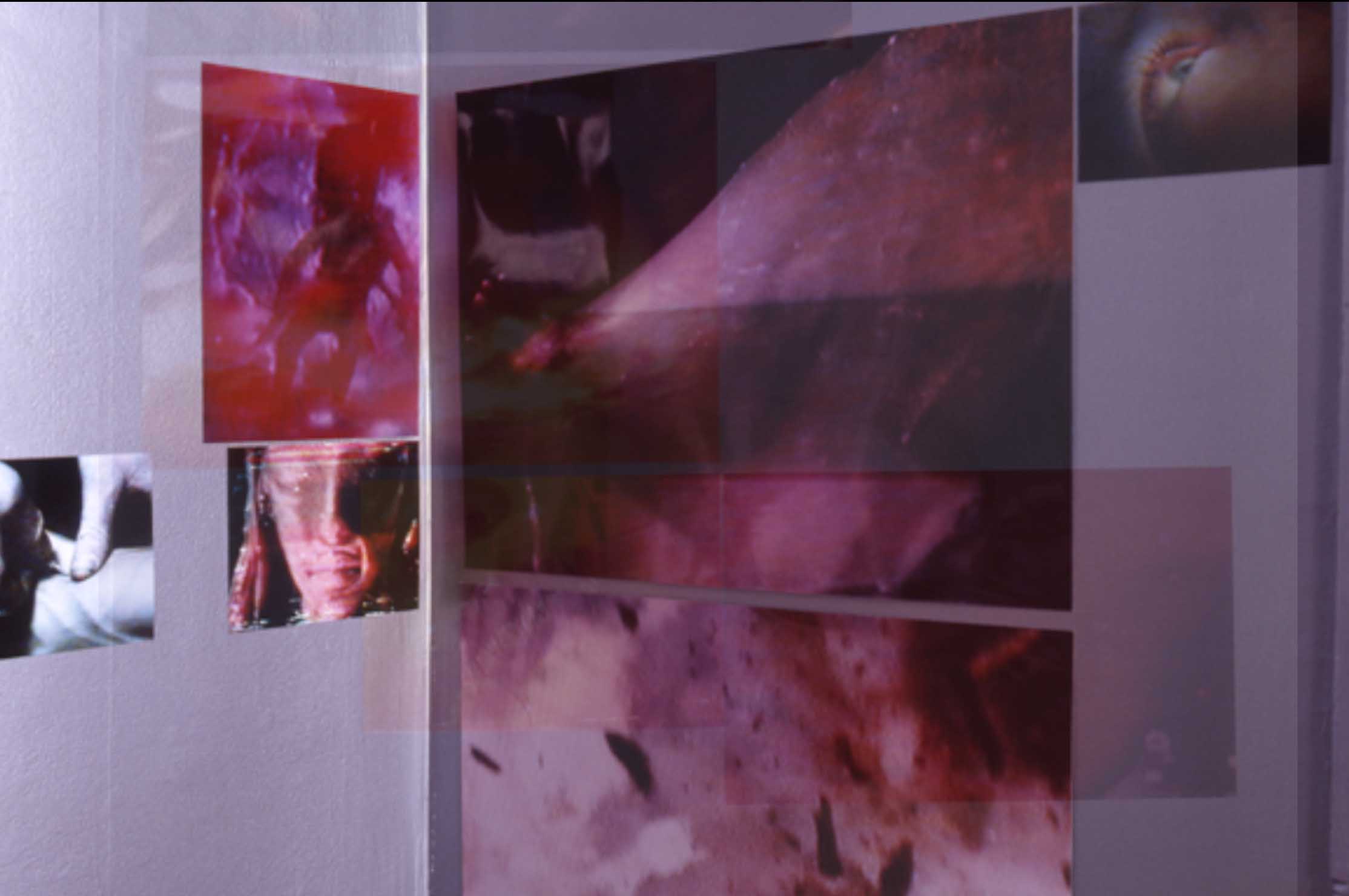
0(rphan)>d(rift) Cyberpositive exhibition installation documentation, 1995, Cabinet Gallery, London
They were a little bit taken aback because it was the era of artists being an individual, marketable thing - well, it still is - and we were quite White Label. The 90s was the era of the YBA’s (‘Young British Artists’ such as Damien Hirst). Ranu and I were arguably employed at Goldsmiths as part of a drive to dismantle that cult of the individual meteoric rise to art star.
We were influenced by music. Memes of distribution and identity in the electronic music scene where DJs or producers didn’t necessarily have names and things were collaborative. We thought about being collaborative as a hive mind. It was also a contagion between a circuit of possession, between the four of us (Ranu, Maggie, Erle Stenberg, and Susie Karakashian). We often worked in silence assembling things.
Predator Vision, 1995, single channel SD video, RT 8:00
Ido_
I’m interested in this methodological relationship to music you were listening to. To sampling, cuts, and breakbeats. Early 0D uses methods of the sampling of the still image and video (Predator and other sci-fi)... I’m curious also about the wall collage works that involved pasting transparencies or photographs directly on prepared walls in these total installations.
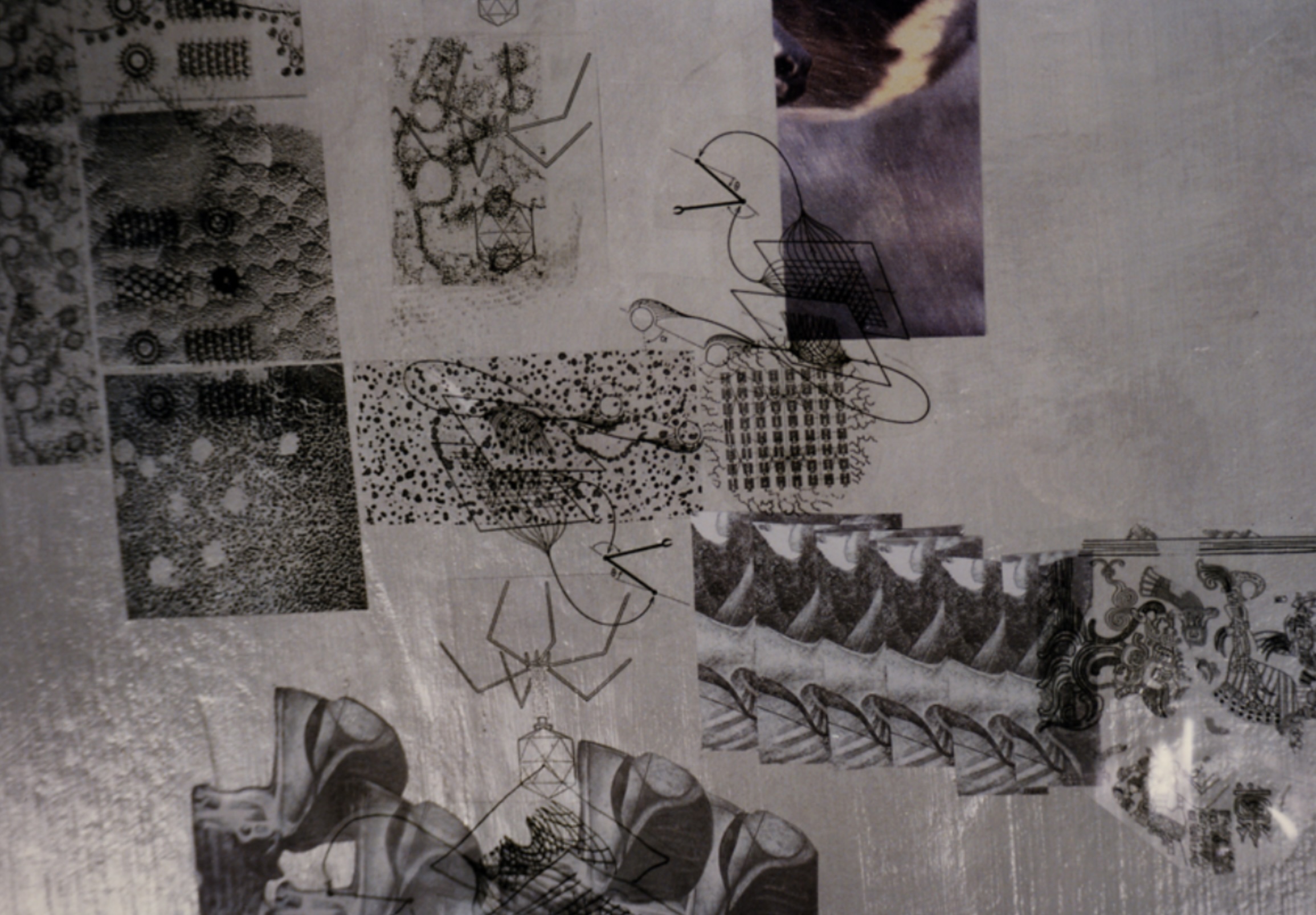
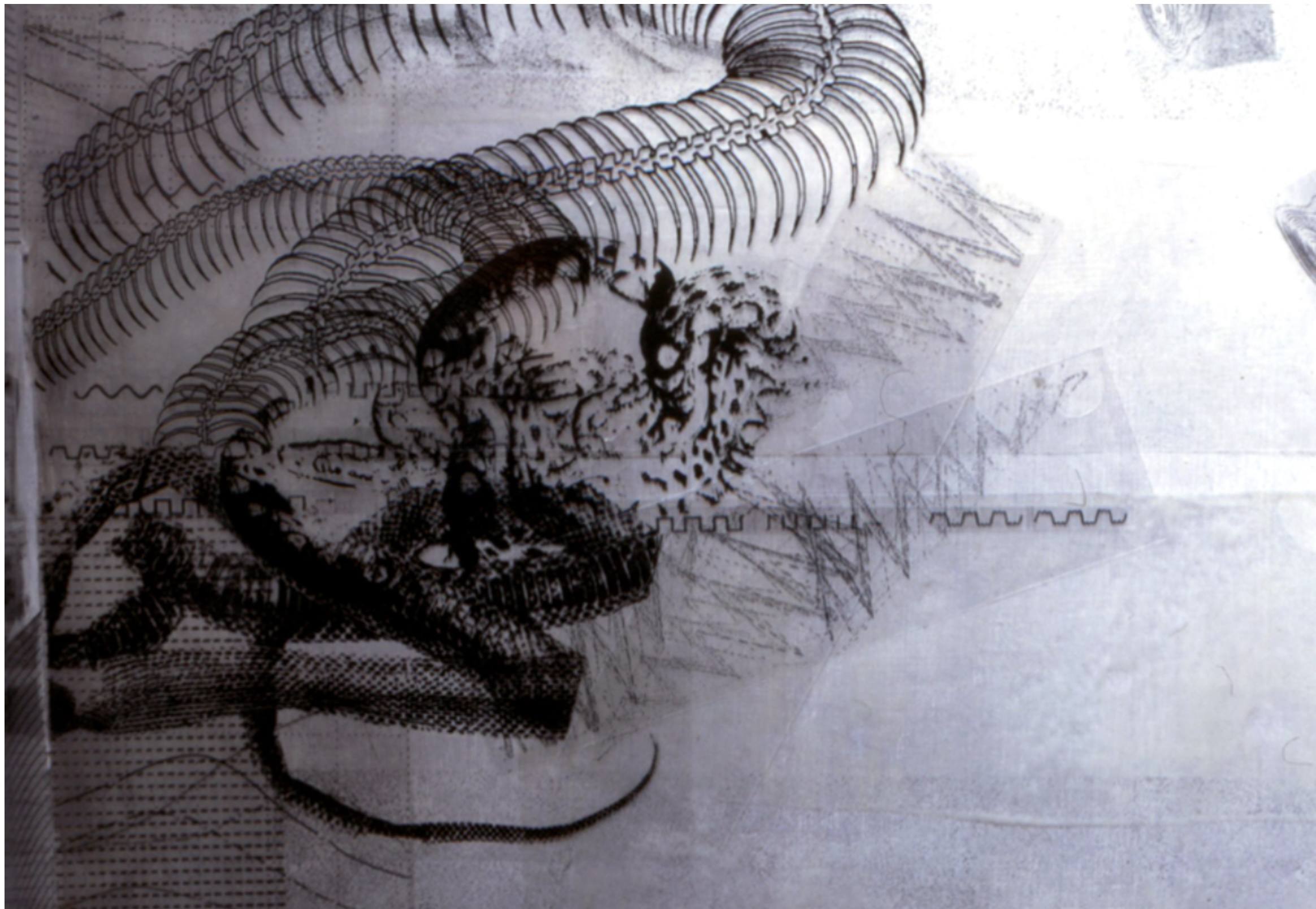
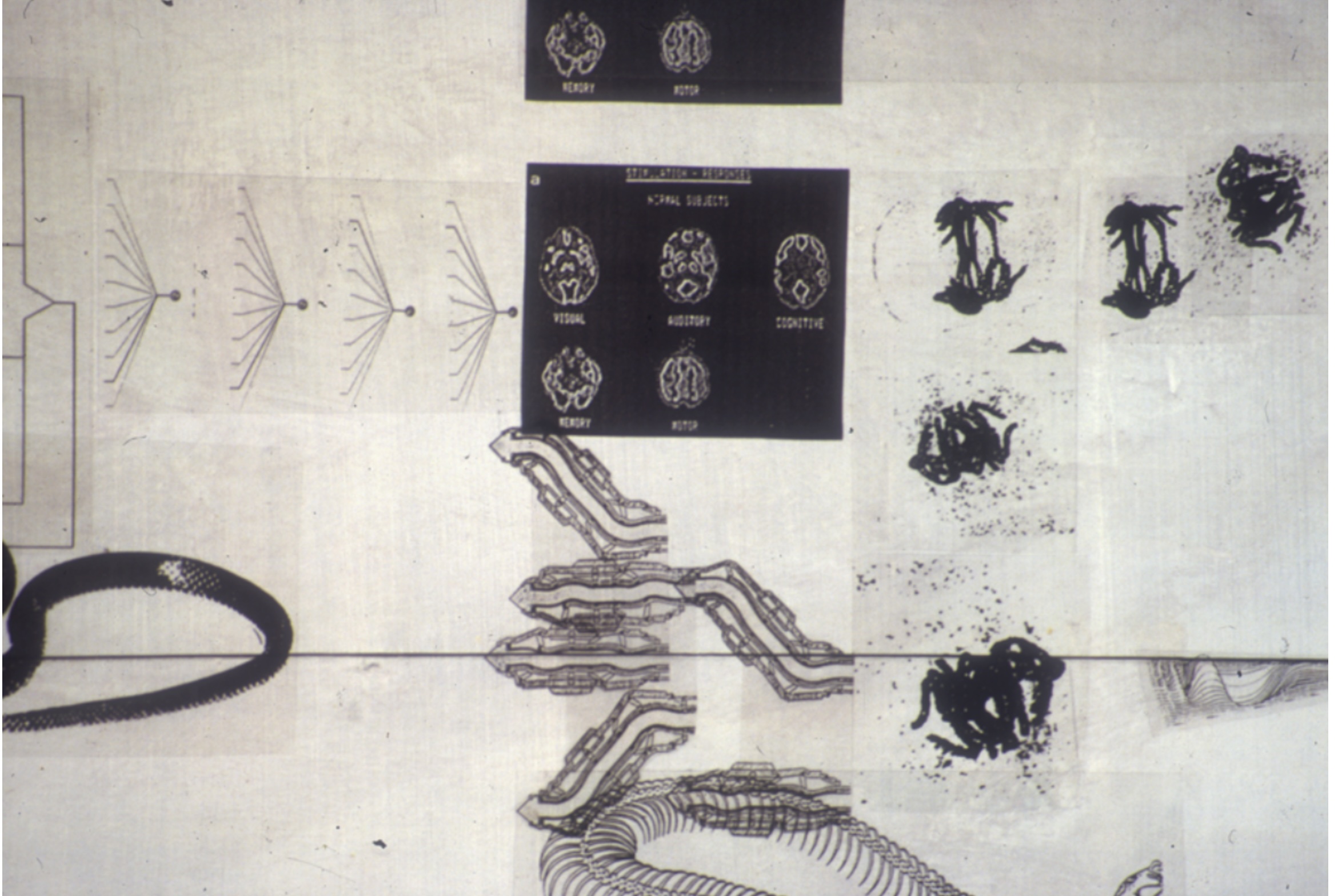
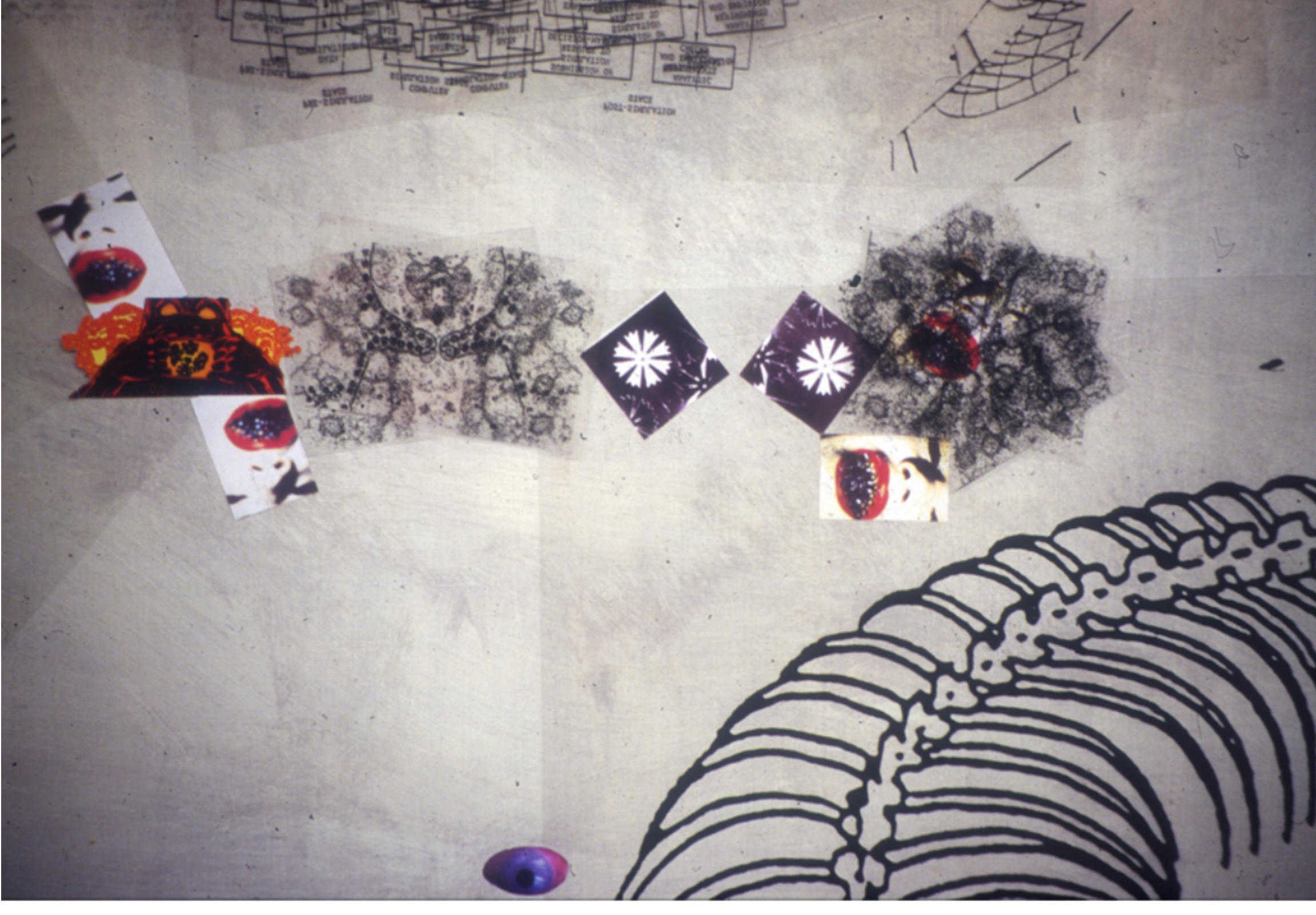
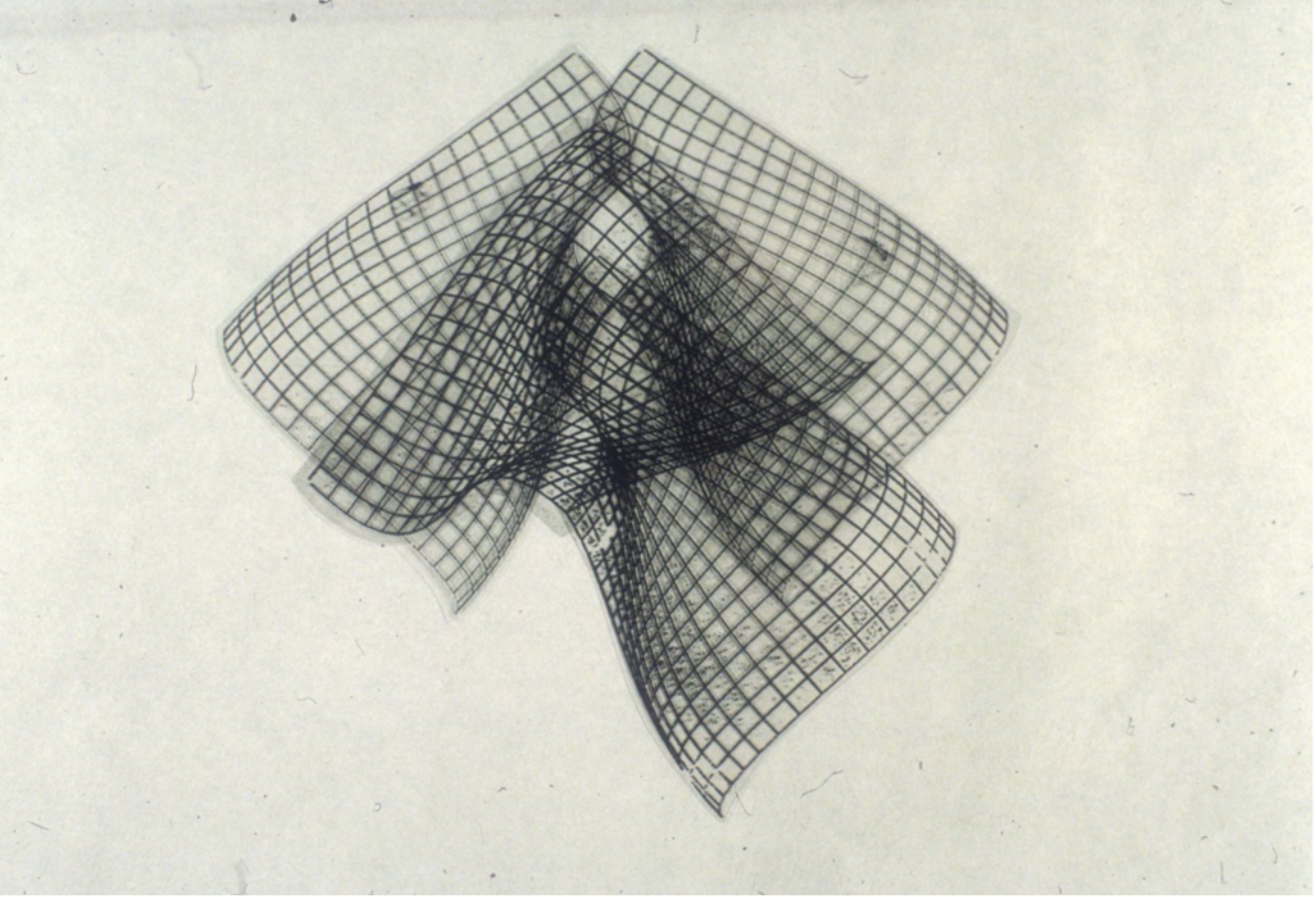
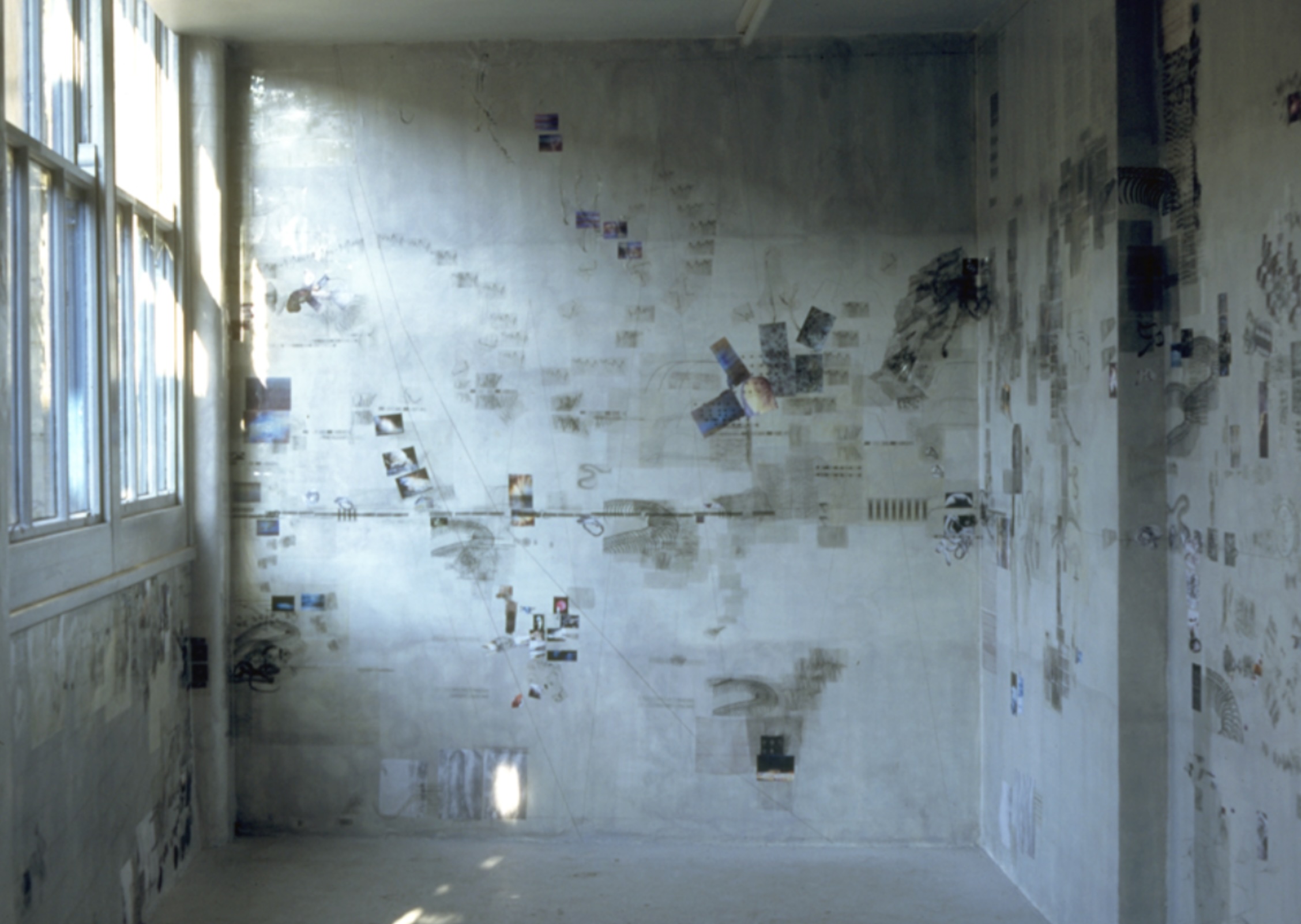
AnteOmega, 1996 (documentation stills), photocopy on acetate, color photocopy, snake skin and paint, Charge of the Light Brigade, BANK, London
Maggie_
We were thinking about the body being written out of the kind of euphoric spacializing of surface that virtual reality was. I think we wanted to bring a lot of analog and texture and materiality into these immersive works, and I don’t think we ever or rarely thought of stuff as just video even though that did deliver a lot of the kind of shimmering, multi-rhythmic, multilayered sort of sensorium thing that we had going on.
Ranu_
We were very deliberately working with different layers of rhythm, and obviously doing that in video, which is linear, but then I think it is when you take that into a physical space that the linear dimension disappears. And it was really important for us to take it into a physical space because we were making things in the round and working a lot with repetitions.
There was so much to do with thinking about the way a (music) track is structured. We really listened to the way the tracks were structured, and then, in that way, worked with image pattern, image, repetition.
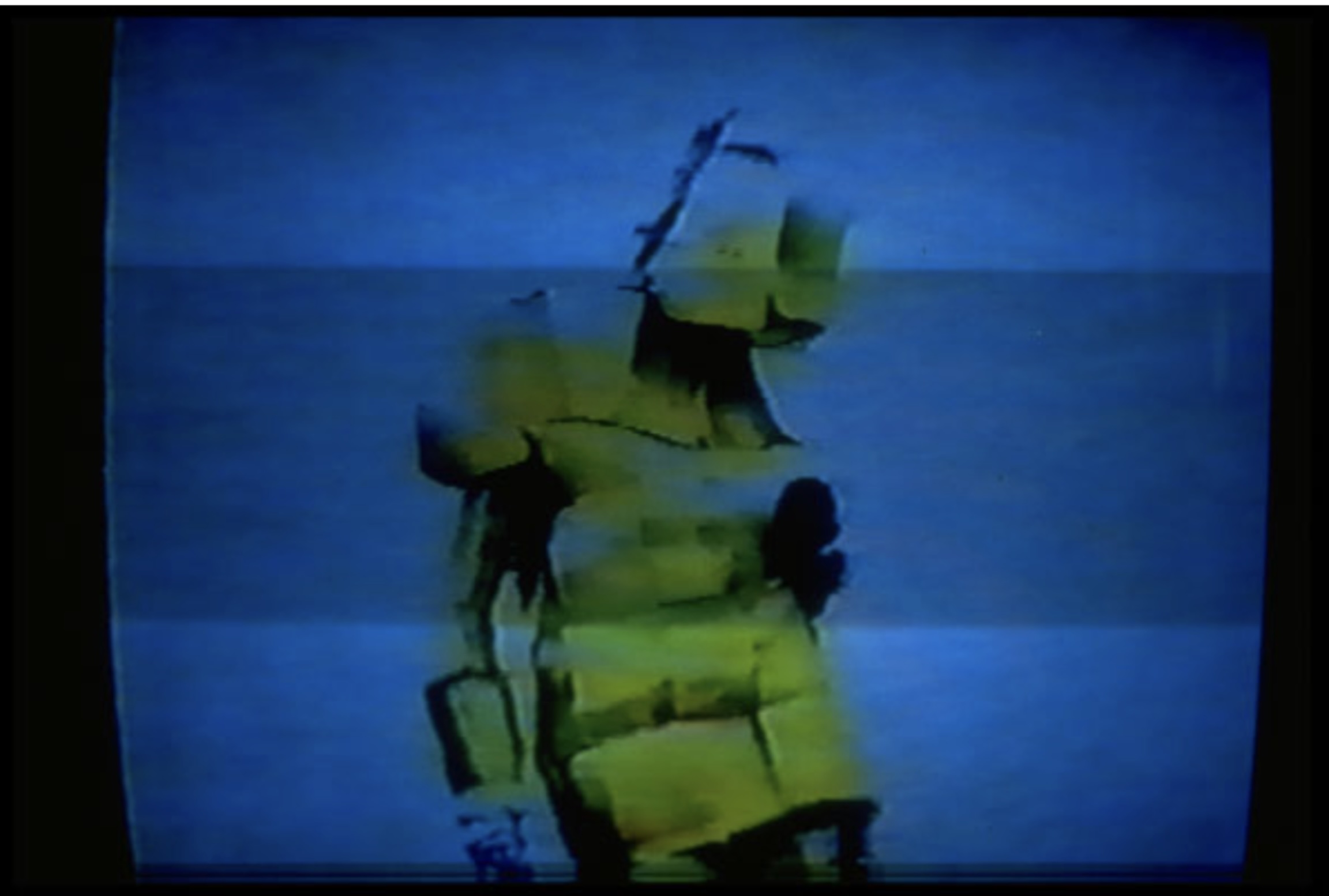
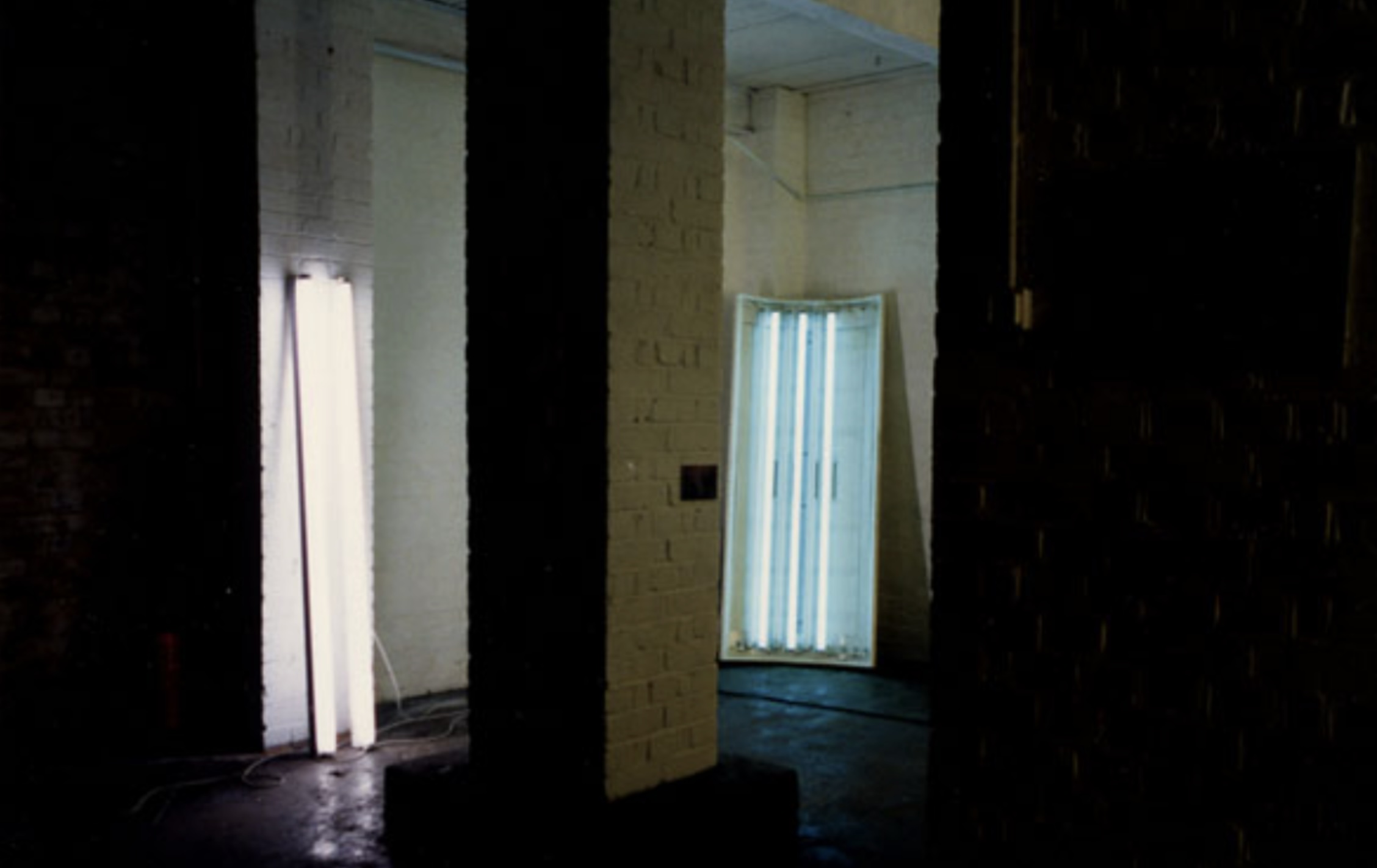
Ariadne’s Gone Virtual, 1995 (documentation stills), fluorescent tubes, video, televisions, photos, fabric, words, sound, string, paint, Underwood Street Gallery, London
Maggie_
We analyzed a lot.
Ranu_
That’s why we used photocopies on acetate or photography, reproducible mediums. Putting that in a space allows you to make some kind of a nonlinear narrative that people can kind of enter into where they want to, and there was certainly some sort of left to right or right to left (we would do both) with storylines going on on the walls, but it was also a space that people could be where their bodies told them to. I think that was very aligned with the experience of being immersed in music that was coming out at that time.
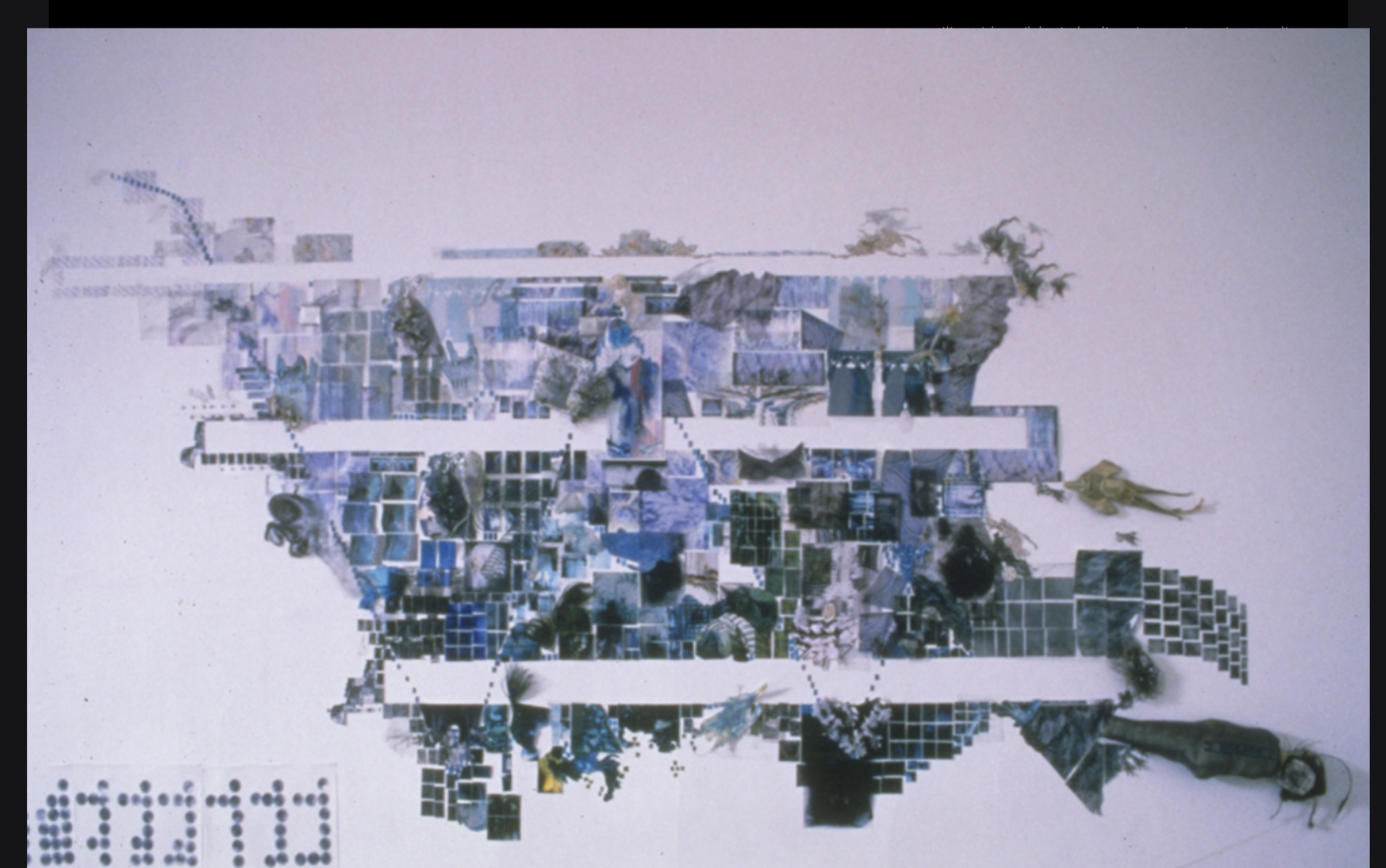
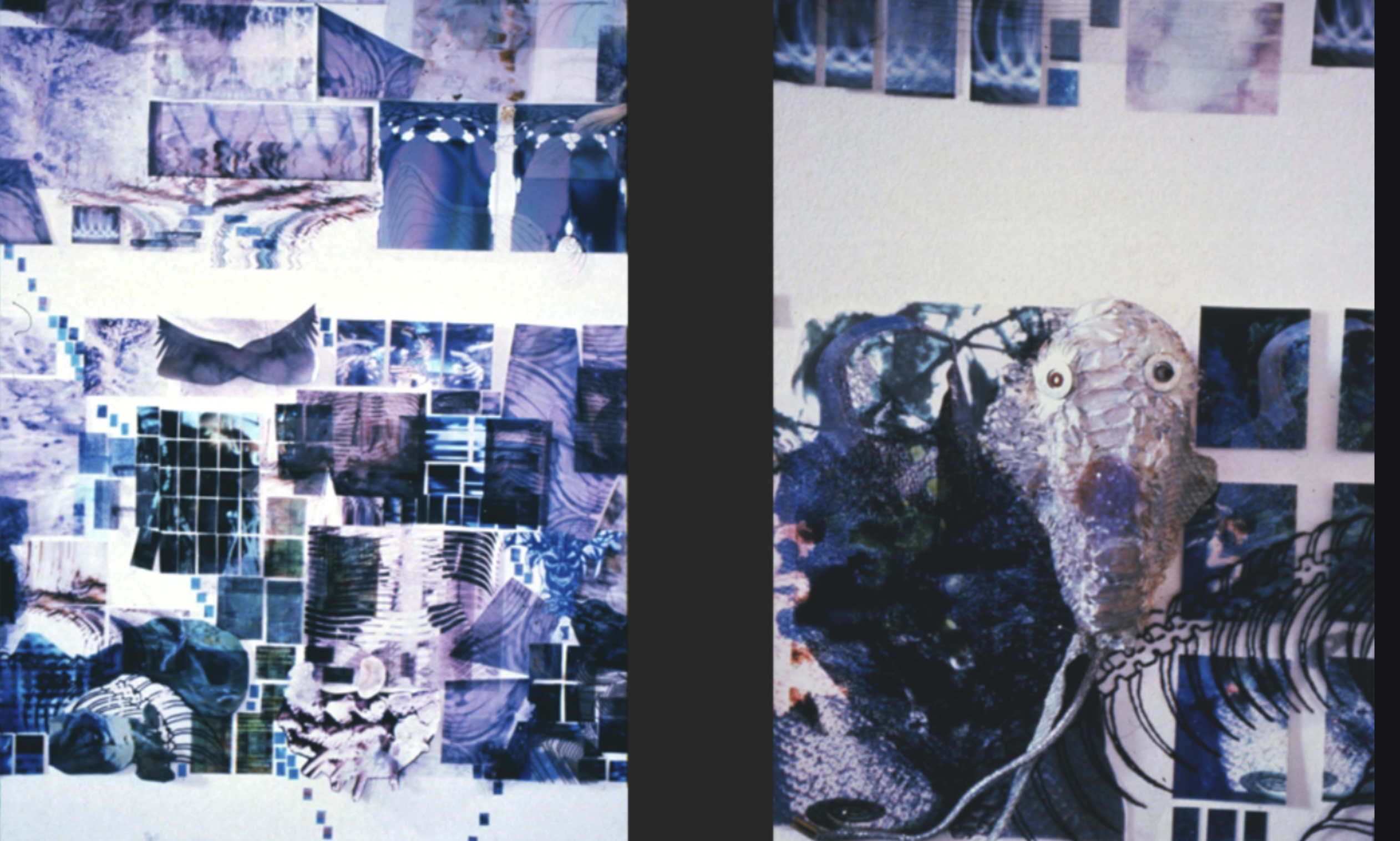
Murmur, 1999, collage (color photocopies, sea creatures, doll, feathers, sequins),
SYZYGY, Beaconsfield Arts, London
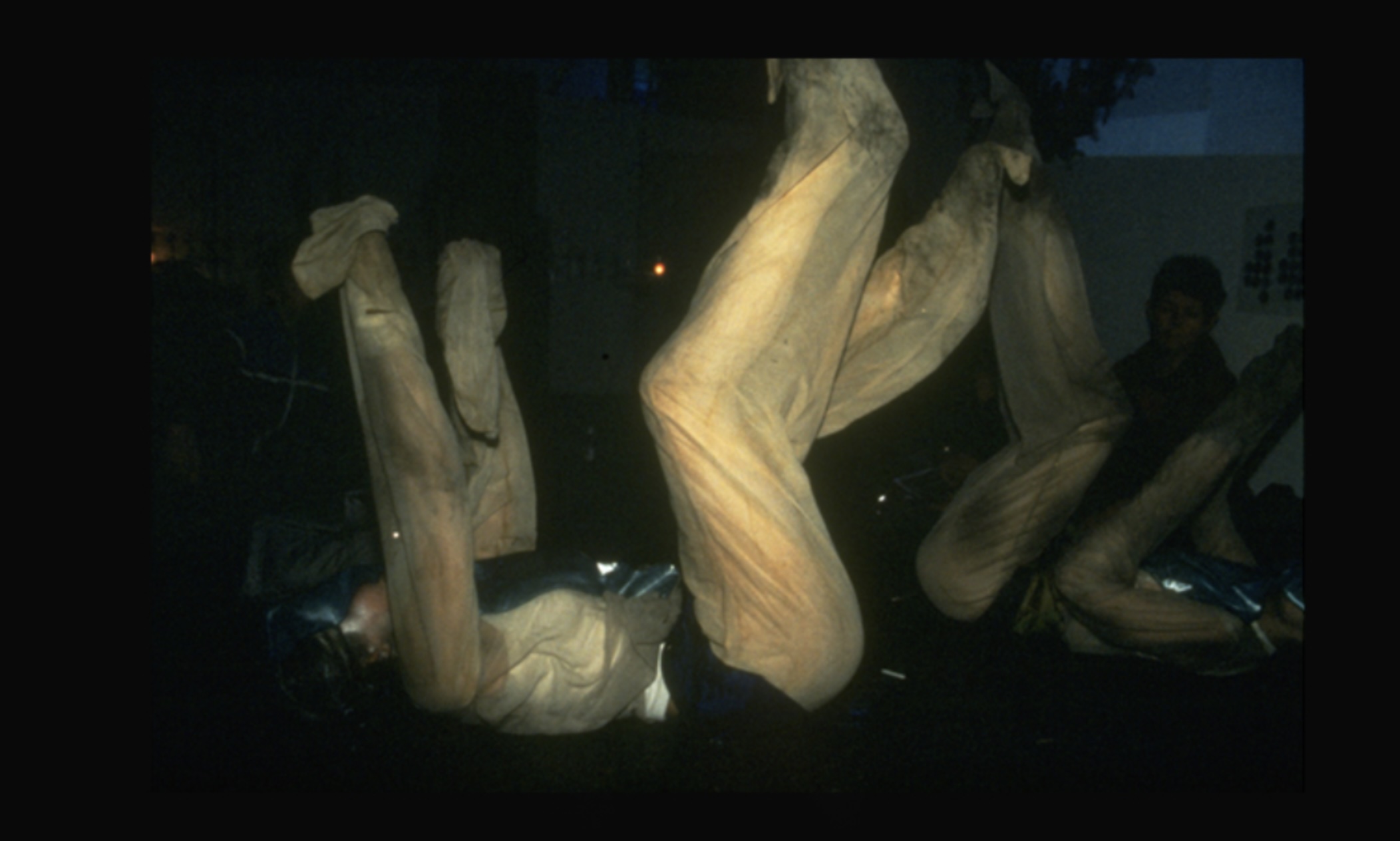
Murmur, 1999, performance (still), SYZYGY, Beaconsfield Arts, London
Maggie_
There’s a thing of translation and feedback where images that we’d made in Photoshop became this cut out collage of photographic things on walls. That was another way of pulling the materiality of the sort of shimmering mirror glass light of the screen out into physical space.
Ido_
And collaborations with machines continue in the work. With the more recent project of training an AI on an octopus, obviously. But there are these notable visual markers of the work, some of which probably track to what is sampled, some to the machines employed, and some to techniques. Some things like solarization or reversal of tone. And then liquidity, rounded forms, drips.
Maggie_
Yes, we were making manifest things that are considered glitch or failure, like noise and magnetic fields and things outside of the spectrum of that sort of seamless image representation that has come to be a lot of the goal of digital images these days.
5-4 Katak, hybridized mix, 1999, single channel SD video, RT 6:16
Ido_
Regarding noise, one thing I really relate to is collaboration with machines, letting the machine have some degree of agency in the process. Which people call error. And it is sometimes error, but not always and is related to this idea of noise and signal.
9006, 1998, single channel SD video, dimensions variable, RT 10:36
Ranu_
We used noise as a material in the work quite a lot. And I think that comes from us being trained as painters first. Using noise as a medium was definitely a really big part of the process. I feel like that was the standard for this idea of the importance of the glitch or the mistake. And it was a glitch, literally, in analog terms, because we were still using analog equipment at that point.
Maggie_
And there was the feminine. There was an essay that Simon Reynolds wrote about us5, about seeing the intensities in electronic beats. It’s about a kind of field of texture and different sorts of speeds simultaneously, that thing of not having a central focus. Part of the feminist dialogue concerned this patriarchal thing of naming and possessing, the whole Enlightenment endeavor of recognizing, representing, naming, knowing. I think we were very much trying to dissolve that.
Ido_
And there is this idea that I really relate to: something flickering just outside of perception - I call it the peripheral vision of the mind. 0rphan Drift pursuing this flickering something, opening out onto it in some way.
Ranu_
This relationship to the screen is so important. Now it has become something that we don’t even think about anymore. Or I mean, I still think about it. But at the time, it was on all of our minds.
I think that was another thing that was becoming really central to culture – coming out of this analog background in painting, but also in film or video – was this very physicalized relationship to the screen. So this idea of the eye as an organ and as a living thing, not just something that’s being acted upon in a certain way, and to remember that it also has agency that goes back and forth, that’s another part of the feminist content.
By undoing the hierarchy of what is in focus on a screen we are suggesting another way of looking, connected to embodiment, sense, and sensation that is connected to a feminist world view. It is also connected to very classic Western feminist discourse around women as the subject of the gaze, but particularly on screen. Having grown up in the television era, it’s internalized to be connected to the screen as an extension rather than to be subjected by it.
Ido_
Regarding feminisms, I want to ask about the relationship between 0rphan Drift and the simultaneously arising articulations around cyberfeminisms, projects like VNS Matrix6, that were more gender essentializing. And how 0D kind of avoided all that.
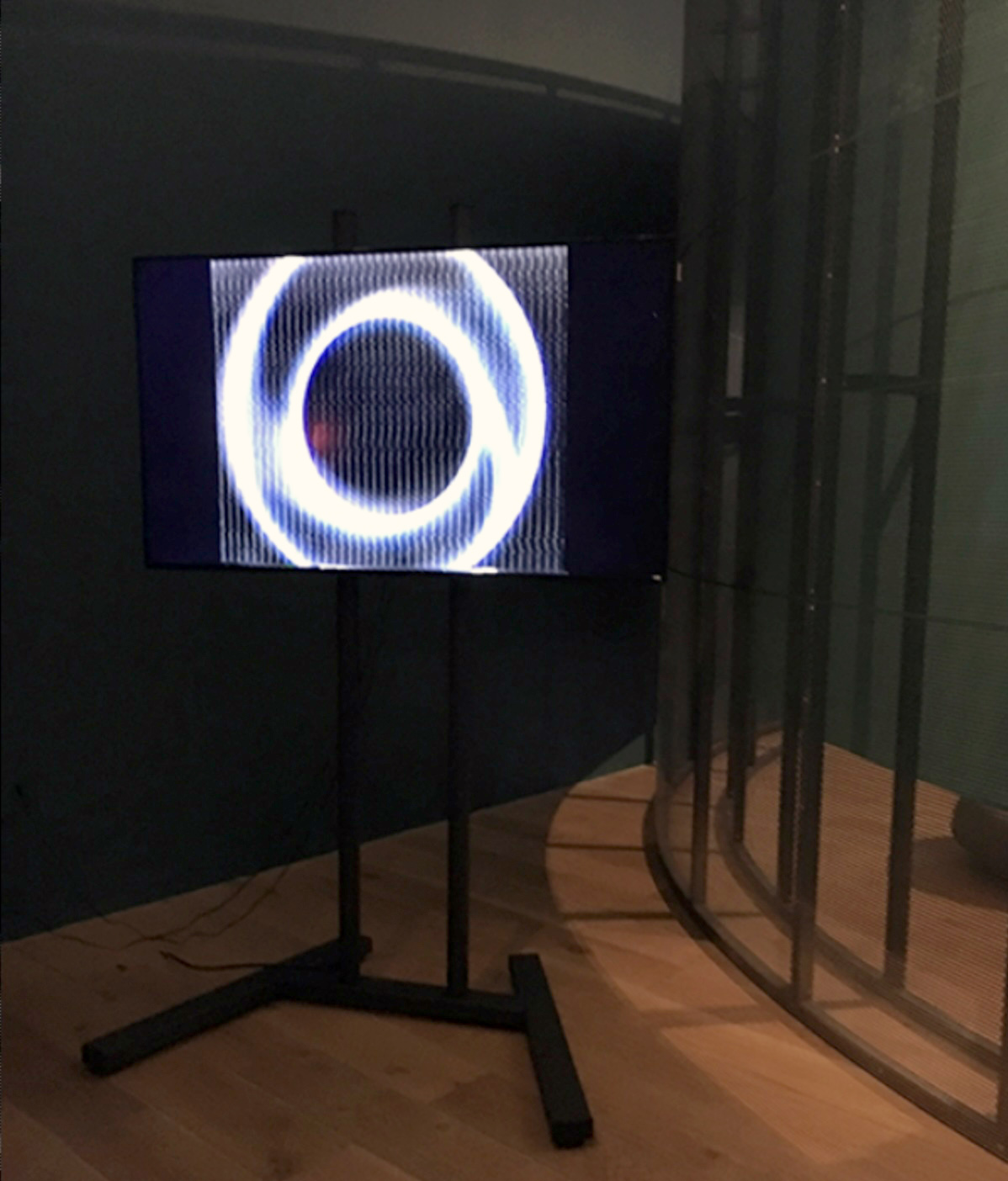
analogue video installation, audio by Kode9, voices CCRU & 0D,
Still I Rise, Gender, Feminisms, Resistance, Nottingham Contemporary, 2018
Nottingham Contemporary, 2018
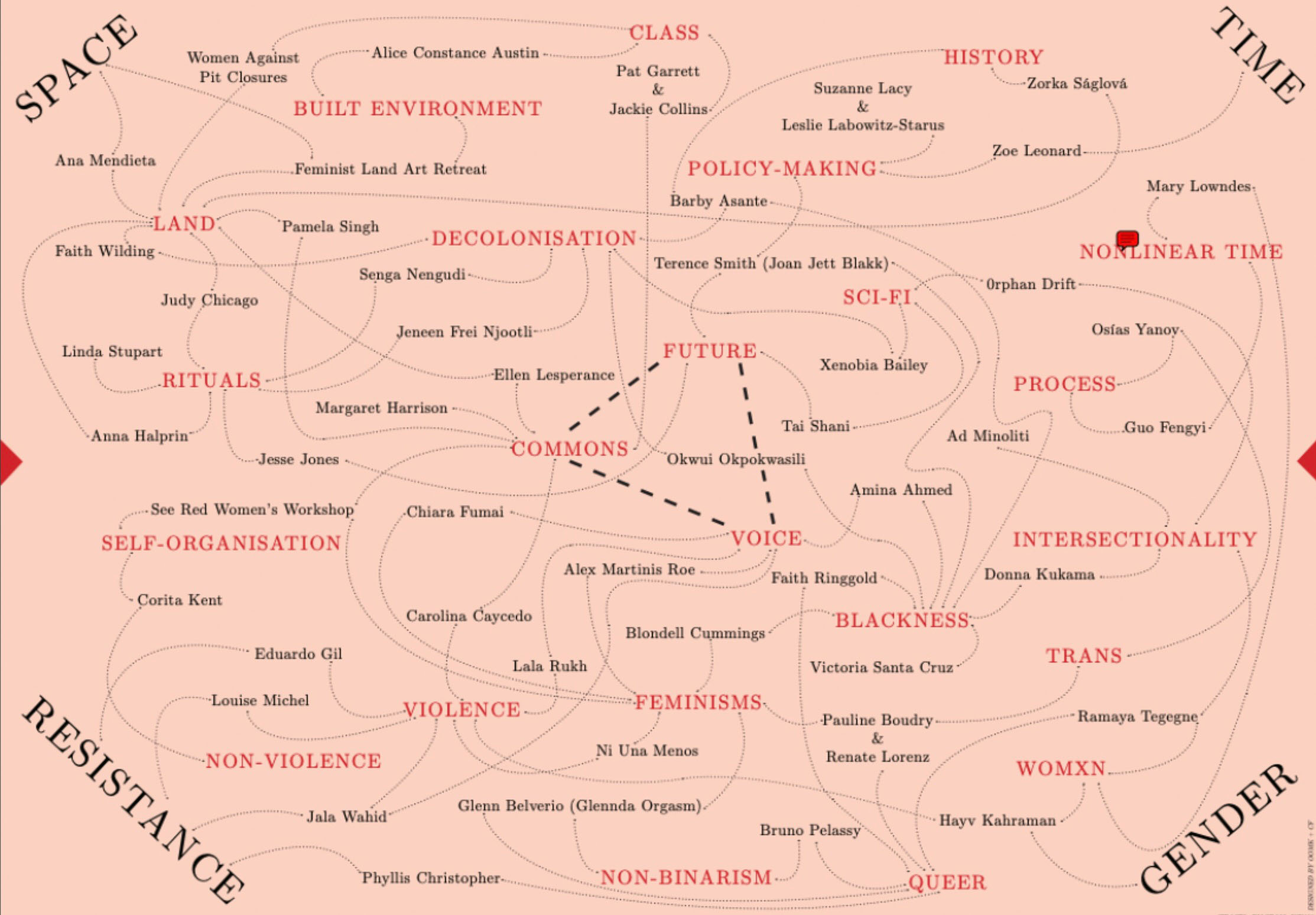
Nottingham Contemporary, 2018
Ranu_
I think we were trying to, and still are trying to look beyond the human for guidance. Trying to make work that actually didn’t anthropomorphize even ourselves. So that probably is what took gender out of the equation in a way that was so totally essentializing.
We didn’t talk directly about this. I remember someone coming up to us at one of the Virtual Futures conferences, and saying, it’s so amazing you’re doing this for all women. That wasn’t at the forefront of our minds. Our conversations were about other things. We were reading people who were feminists, and definitely had a relationship to writers like Donna Haraway, but she similarly is also talking early on about the beyond-the-human.
Maggie_
I think I probably had a big investment in the fluidity and the layering and the lack of central focus, and the immersion is being some kind of this dismantling of perpetual representative space. I’d say I still think of that as a sort of feminism. But as you say, Ranu, it wasn’t specifically talked about much. It was just the thing that was innate in our methodology. Our methodologies were loads about making space for the unknown, and not talking about or inhabiting logical, linear process.
Ranu_
I don’t think there was any doubt that we were doing feminist work. It was just really innate. That was the starting point but not what the work was about.
Ido_
Let’s talk more about this idea of machine collaboration. Thinking about our relationships to evolving technologies: what they afford us and what they do to us. In general, how our subjectivities are shaped by our technologies. Thinking about tech anxiety or technophilia. Not unrelatedly, I also know that 0D explicitly invokes Deleuze and Guattari’s machine assemblage or machinic unconscious.
Ranu_
It’s changed a lot. At the beginning it was very much working with these analog tools and inserting the glitch and mixing a lot of found material. It was all sampling, collaborating with machines, physical machines as equipment and also collaborating with what we would think of as machine in a more expanded sense like the machine of image replication, the machine of the narrativization of nature which, because we used a lot of nature documentaries and sci-fi, this fictional machine which has definitely carried on into the present for us as an idea.
Maggie_
And machines that made visible that which is invisible to human perceptions. Spectrums and frequencies. I think that was another kind of what we called machine vision. You become aware of your insides, the porosity of boundaries, and scales, because you can see inside your body or out into the cosmos. Or speeds - we’ve played a lot with speed - that kind of retrains the eye like by having everything maxed up on the video tapes.
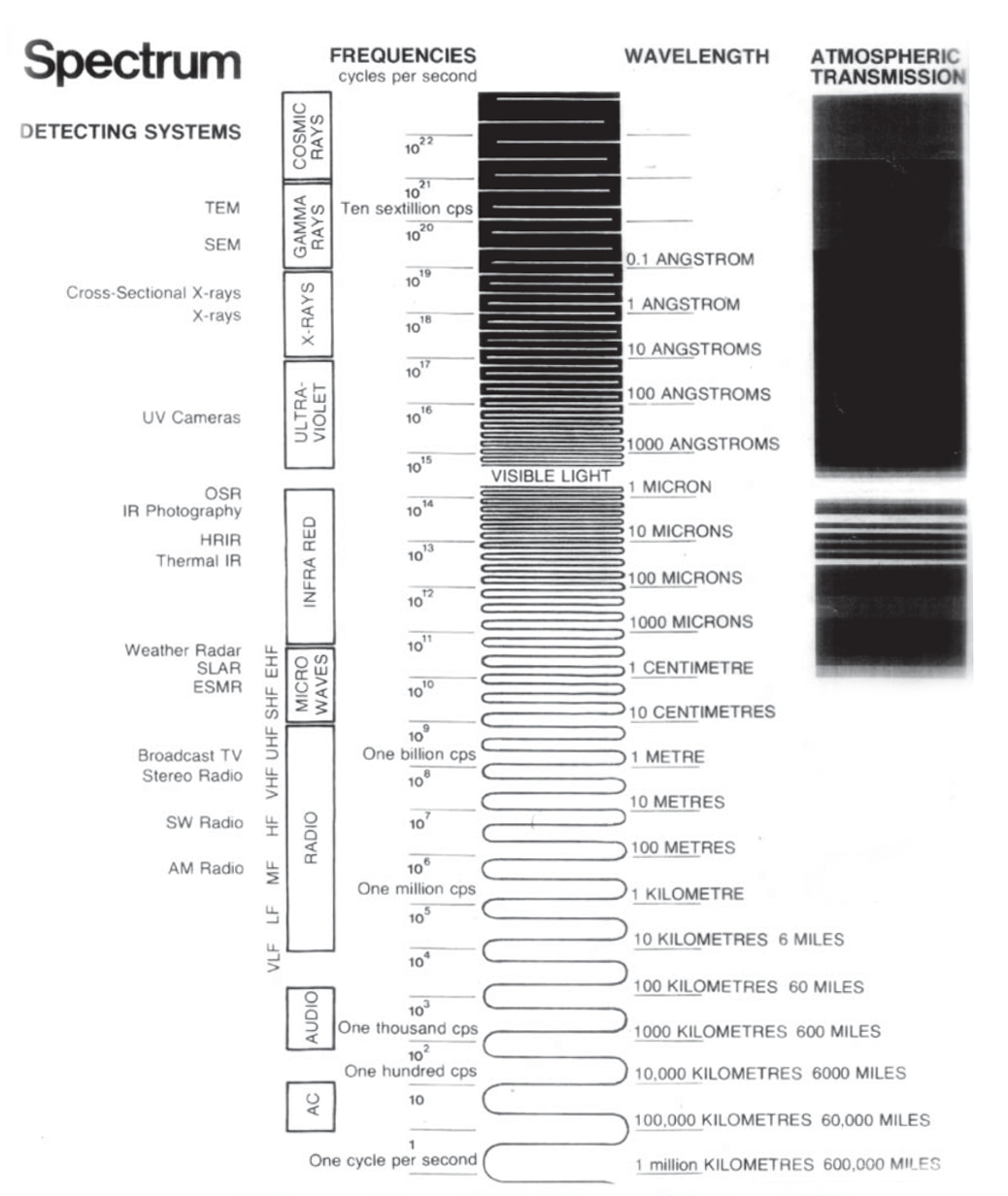
0(rphan)>d(rift) Cyberpositive book, 1995, spectrum map
That speed, repeated fast forwarding, again and again, was partly about eroding the magnetic field information on the tape, but it was also kind of interesting to see what we could still see. So there was a sort of relationship with collaborating with machines for me that was quite physical, sort of re-programming the senses a bit through that repeated engagement. And there was also a sense of ancient and futural machines that got a bit more clear later.
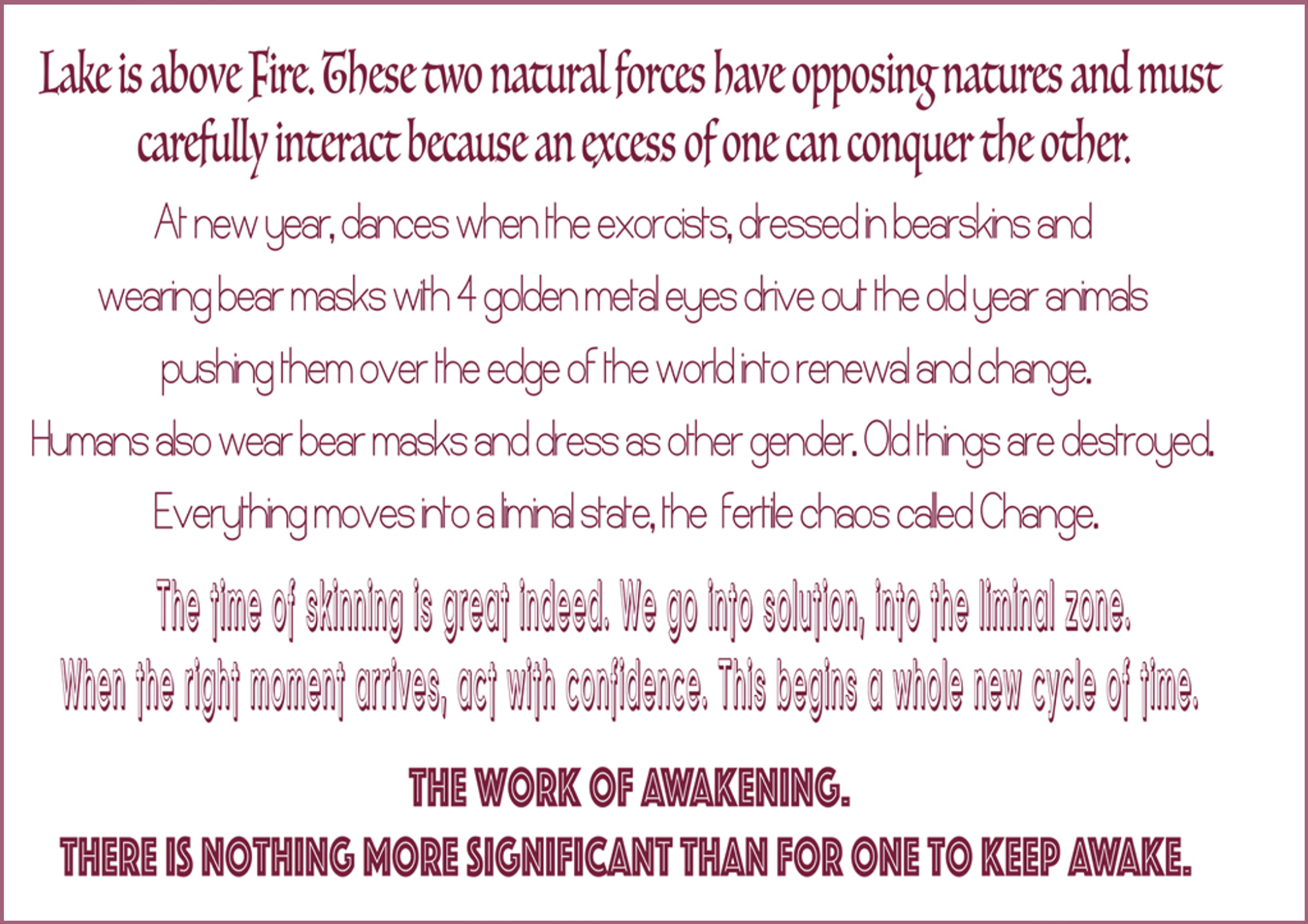
Hexagram 49, 2016, window installation, inkjet print on crepe de Chine, 218 x 361 cm, Unruly City, Dold Projects, Sankt Georgen
For a recent work, we consulted the I Ching which Ranu has done a lot in her own work. It was really interesting. We got the Hexagram 49, and made this piece called Unruly City7 (2016) about it. I’ve since found out that that is considered one of the most radical revolutionary hexagrams. That’s probably really abstract use of a sort of machinery or a technology, different scales of time, where you might think something is coincidence, but we had a lot of coincidence that felt like it was coming from kinds of time and space that we don’t inhabit with physical bodies.
Unruly City, 2016, single channel HD video/animation, RT 30.35
Ido_
Coincidence or contingency. I wanted to ask about form and content. In Simon O’Sullivan’s book, Fictioning, he writes about Cyberpositive and John Russell’s SQRRL8, and he argues that they are instances of Xsf, after Quinton Meillassoux, attempting to instantiate an outside in the world present at hand, or he says, “fictionings in which sense does not collapse so much as seem to arrive from an outside.”9 So thinking about the form of your Cyberpositive book and its sections of decayed text in which spacings between clusters and letters don’t correspond to the beginnings and endings of words and sections of zeros and ones are cascading across pages. I think you told me that you were working with optical character recognition software.
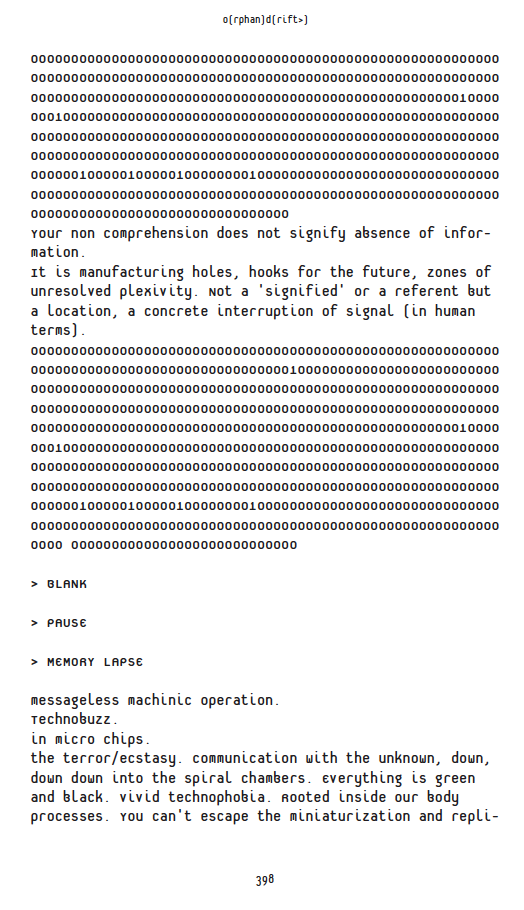
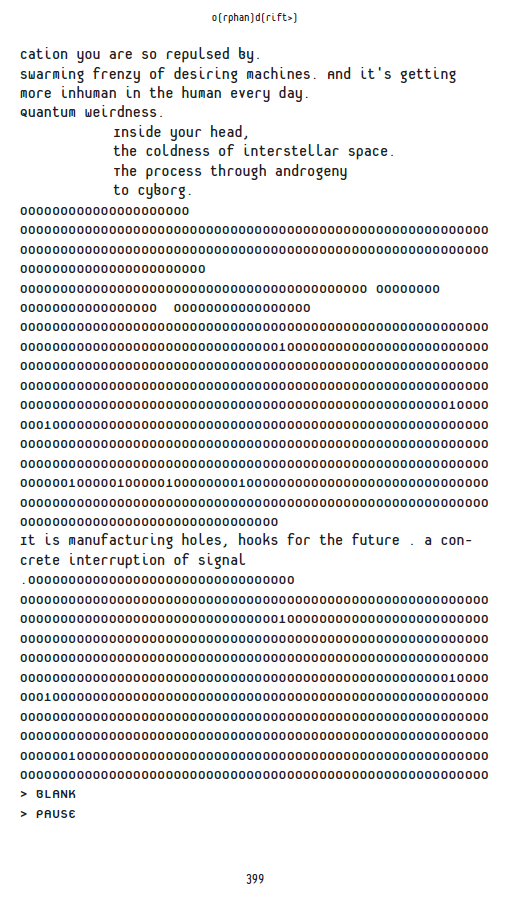
0(rphan)>d(rift) Cyberpositive, 1995, selection of book pages
Maggie_
No, recognition software did not exist then as it does now, we just used a scanner. The poor guy who was paid to do the designing ended up having a bit of a nervous breakdown I think because he had to scan all the pages in, so that when they came to be printed they’d be treated as image. So the text of letters weren’t always letters, and also we chose a font that was fairly unreadable.
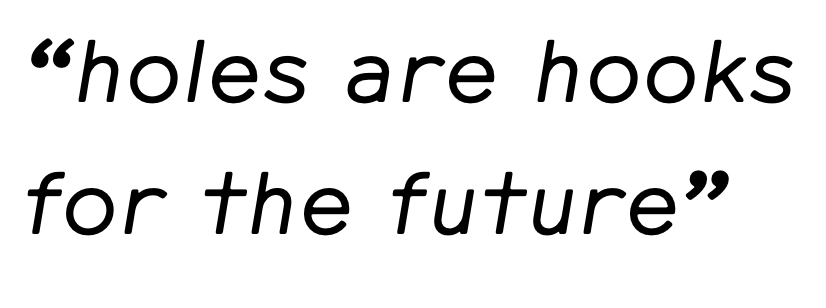
And then also the words sort of join or part or shift. Where they begin and end was a kind of form of possession at random. I had worked with this a bit in a very early performance lecture we did at the Royal College called Possession10 (1994). We were at the time very interested in speaking in tongues. Another kind of machinery, you know, that was very influenced for me by Neal Stephenson’s book, Snow Crash. There were a few seminal sci-fi books that weren’t really so fictional. They were like a methodology for us. In a way they were very viscerally and experientially understood. The zeros and ones in the 0(rphan)>d(rift) Cyberpositive text were inspired by working with Nick Land quite a bit on how far you might push language towards the machinic. Now it feels a bit of a commitment, having pages and pages of it, with just the odd bit that says “holes are hooks for the future.”
Ido_
It’s hard core.
Maggie_
I think quite a lot about the time we were living in. In the 90s in Britain, you were still able to be on the Dole sometimes. There was more expanded time available. Or there was a relationship to temporality that I just don’t have now. Everything’s calendared and time-factored. 0(rphan)>d(rift) Cyberpositive starts off as something specifically outside time.
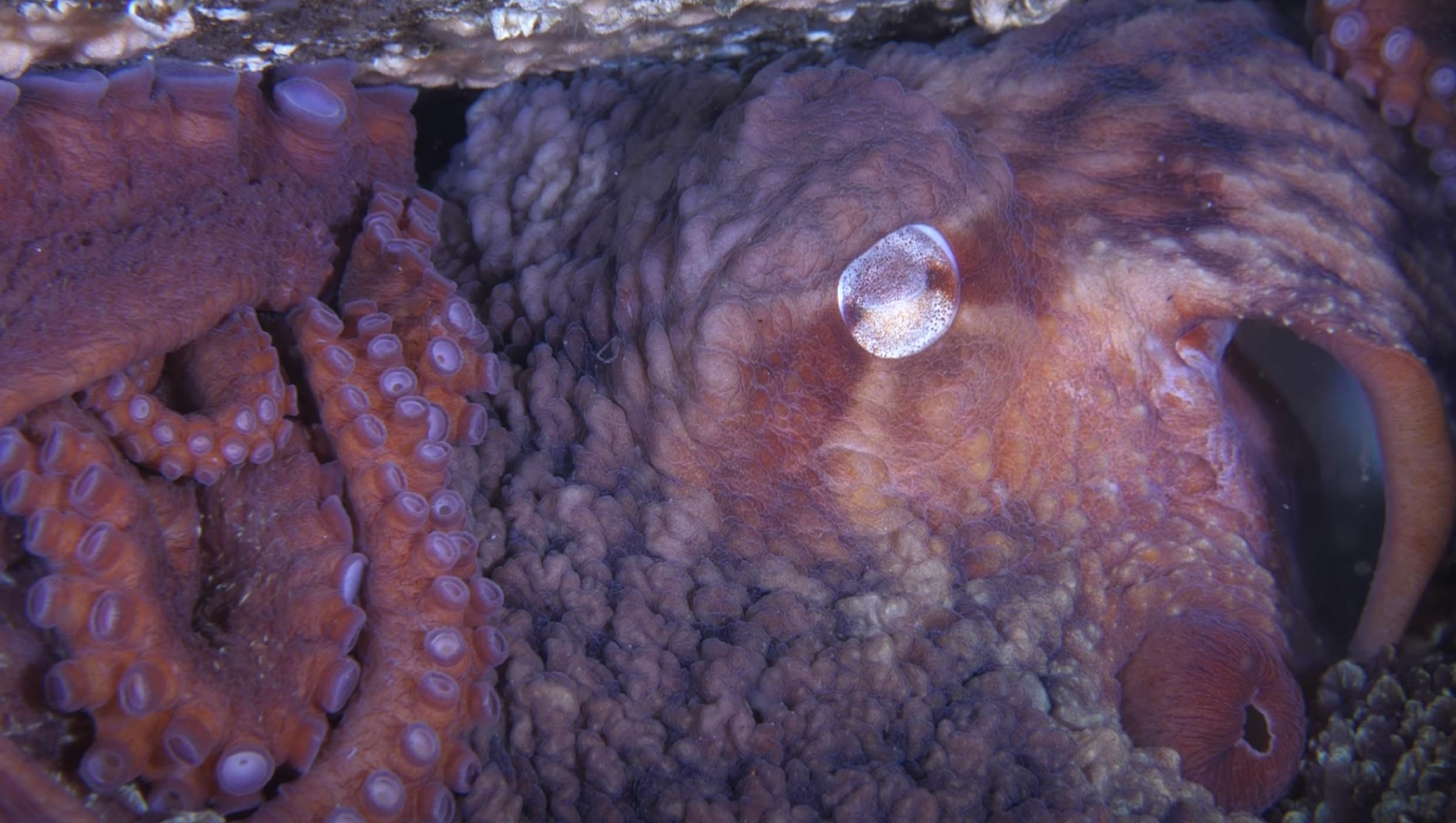
I would just sit there, and be a channel for it coming together, and it’s really just doing its thing. So in a way that book is a machine that I was, we were a part of facilitating. I always think of that bit in Neuromancer11 where there are all those arms, a long-lived AI making art, (the octopus for 0rphan Drift) arms collecting from all times in history and human experience, and kind of weaving all this stuff together that’s flowing all around it physically in the machine.
Ido_
Villa Straylight.
Maggie_
Yes. I suppose the book feels a little bit like that to me. It had creative writing in it from Ranu that she’d written in Mexico, and from other people who are involved more peripherally with 0rphan Drift. But it also had a lot of just unashamed sampling as well, from Scifi, conversations, philosophy. In a way that made a new story, or not story, but it wove its own thing.
Ido_
I think the fact that it is not a story or not a narrative is one reason why it’s so important. Because it would be easy just to sort of construct a narrative out of that stuff. But this does something much weirder, where it sort of impresses on the reader a sense of things without allowing them to become overdetermined.
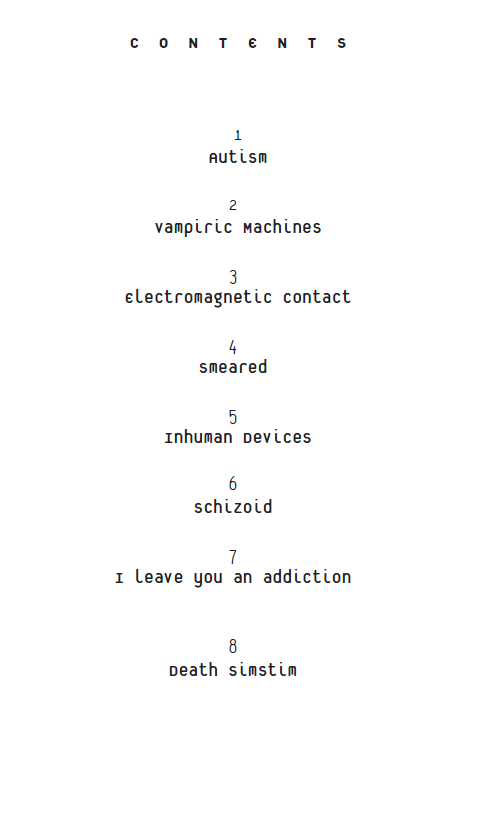
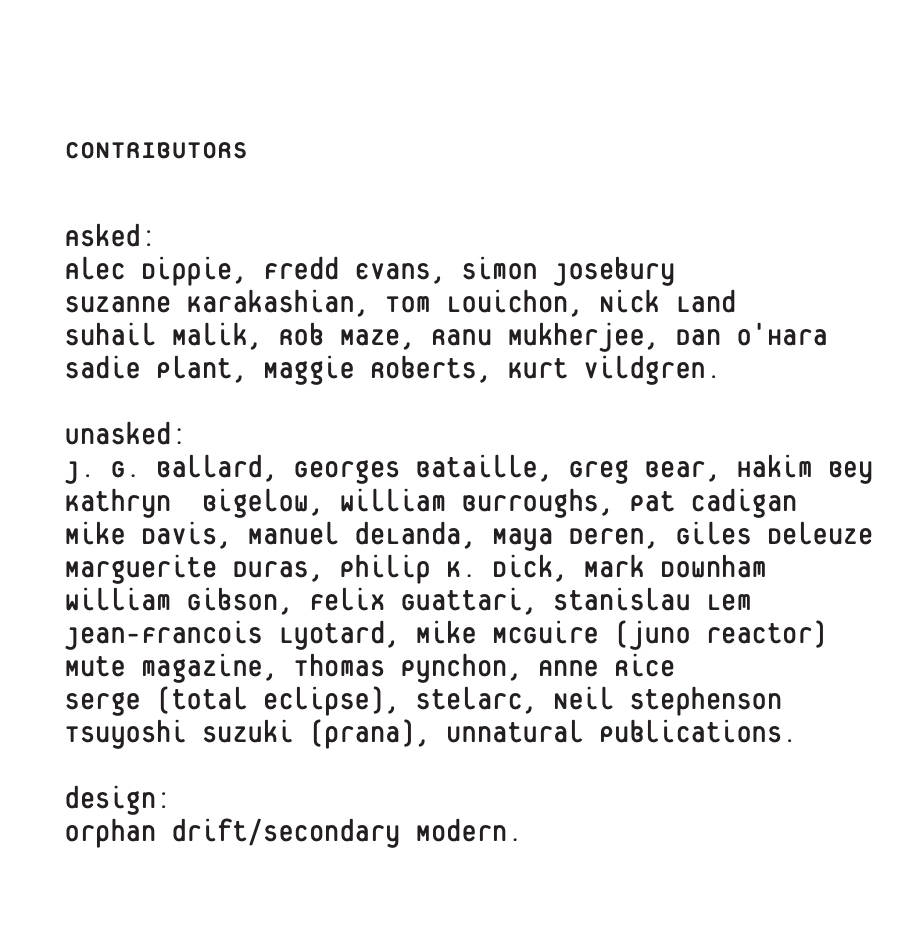
0(rphan)>d(rift) Cyberpositive, 1995, contents and contributors pages
Maggie_
And the chapter titles are important. Ranu and I are both fairly voracious readers. And I think I have never understood the difference between fiction and so-called fact. So to have theory and fiction and creative writing and speaking in tongues and machine code interwoven was a delivery of something at the time that, felt like another fuck you to the separating of kinds of modes and methods of being. I know how to talk about it now a lot better because we’re in the time we are, understanding the damage done by separating kinds of knowledge and experience, etc. And separating species experience from each other in this human-centric, Eurocentric, white, patriarchal, hyphenated thing that’s produced 21st century global capitalism and Climate Crisis. We were quite angry about the system and the state of what was valued, and what was ignored. We prioritised a confusing of figure ground relations. We still do.
Ranu_
I think the materiality of the text that you’re talking about as pressure was definitely the feeling that we were trying to get across in a lot of the work. And that’s really true about the work’s interdisciplinarity for want of a better word, taking the sort of things that are held apart by culture, especially by the culture of education and the university system and allowing them to talk to each other in ways that mingle within us much more than we give them credit for.
Ido_
I feel like one thing we’re just adjacent to is the relationship of Cyberpositive or 0D’s project more generally to the virtual. And I don’t mean VR, but the Deleuzian idea of the virtual as something that’s already existing alongside the actual as part of the real.
Ranu_
That’s something we did talk about all the time. It was really clear that the virtual was going to get compartmentalized into what’s on the screen or something ridiculous like that. And it’s kind of now happened, and we’ve come back out of that again or a few times since then. But it felt like these other forms of storytelling, in the realm of literature or in the realm of the spirit world or anything like that, are a sort of older technology and I think we were always interested in looking at that older technology…
Maggie_
…that operates through the body, the virtual as channelled through the body.12 I think that’s maybe related to our interest in vodou, because it’s both so pragmatic and absolutely out there. In the descriptions in Maya Deren’s book, Divine Horseman13 about the white darkness moving up her legs. I remember thinking that was a really amazing description.
Ranu_
Regarding invoking these African traditions, we were talking a lot about George Bush and his invocation of “voodoo economics.” We wondered why is this African tradition being invoked by an American President? This sort of warping of a very old set of spiritual traditions into this kind of demonic force by the white man, which is basically what that narrative of voodoo economics was. So we started looking at what is that tradition, and what kind of technology is behind it?
Maggie_
Things that act from virtual realms in our habitats and fantasies. Such as the Loa (vodou Lwa) that William Gibson used in the Neuromancer trilogy. I think we were already thinking about all of this when we met Nick (Land), who introduced me to Neuromancer. And it was an amazing recognition point of someone using the Lwa as a vehicle for talking about really porous skins or boundaries between dimensions. We were very keen on these temporal/spatial, screen/physical boundary liminalities. All this virtually echoing each other, circling in.
I teach, and the main course I teach is called “Virtual Worlds,” and there’s only one of the seminars that’s actually about VR. Now, there is a lot more writing that articulates how the virtual operates in the actual. I don’t even feel comfortable splitting them, but rather am thinking in the vein of Timothy Morton’s Hyperobjects or the Bureau for Linguistic Reality, a project by Heidi Quante and Alicia Escott.
Ranu_
Yes, they are making words for things that we don’t have words for yet. I made the word "Shadowtime" with them in 2015.14
Maggie_
I think there’s a lot more awareness now of the circuits between different kinds of real, and the virtual is a massive part of all that. But a lot of our texts and talks and ways we spoke about what the work was about a kind of bringing the invisible into the visible…
Ranu_
We were trying to map some sort of elemental mechanism onto these layers of experience that we were having and wanting to do it outside of a Judeo-Christian tradition, looking at several African traditions as a kind of guideline.
There was a night in London that was really important when we met Leah Gordon15 who’d done a lot of work in Haiti. There was a Vodou group that came to perform a ritual in a nightclub. Which was both just what it was and at the same time showed the sort of performance that is part of that tradition.
We ended up becoming really good friends with Leah and going to Haiti and spending some time there with her and understanding the relationship of those traditions as moved through a colonial process of coming to the islands, all of these histories.
Lineaments of the Lwa, 2002, single channel SD video, RT 29:15, Leah Gordon, Ranu Mukherjee, Maggie Roberts, commissioned by the Haiti Support Group
Those things are important to say because there’s one direction of it coming through a sort of Western experimental film through Maya Deren, then through Western politics, and then through white science fiction. But there are also spiritual traditions that I want to recognize that when we’re talking about it, it’s really important, because we were sort of trying to understand those mechanisms, how it could be both a performance and a possession; just understanding how those things coexist when you take away certain kinds of restraint that we have inherited in a kind of colonized space of the mind.
Maggie_
There was a lot of thought circulating equating trance possession when summoning the Lwa with rave culture over several nights of dancing. We were trying to understand the mechanism. And the more we got to talk, to witness, to meet people, and watch how Vodou circulates in Haiti, we saw the methodology of that practice was so much better than rave culture. Really weird in a brilliant way, a multi-dimensional reality, being what people just lived. I’ve understood more, talking with San Bushmen elders and Sangomas during my time living in South Africa.
Ranu_
Yes, and the ancestral nature of that, that the spirits are demanding as much as liberating. It’s like when my cousins in India talk about the ancestral network, they say, Well, it’s just like a digital network. There is a directory, and it moves you in certain directions. This description is their way of translating it for somebody who hasn’t grown up with it.
Ido_
But thinking about how our subjectivities are shaped under capitalism, as we’re interpolated into its flows. And 0D, reflecting on the ways that subjectivities are shaped by the digital in a time that precedes the digital, an imagined digital, there’s this thing in the book that says, “that’s all we’ve ever done is change for the machines…”
Maggie_
That’s a quote from Pat Cadigan’s Synners16.
Ido_
You were talking about a culture of resistance. But also what’s interesting is this anticipating of an emerging subjectivity shaped by the digital that I feel you’re able to materialize or sort of prefigure.
Maggie_
Never in my world did I imagine this nightmare today, envision social media or being co-opted into a marketing and surveillance culture.
I was interviewed a while back in conversation with Suzanne Triester and she was saying, it’s kind of a responsibility of us slightly older ones to really carry a memory of that time. A time when we were envisioning and experimenting with kinds of subjectivity that we thought would be becoming with access to the virtual via our technologies, that whole thing of technogenesis would be a really strange and convoluted journey for humanity. And it’s just not been that in many ways. It’s like, okay, time is compressed and homogenised into social media scrolling, and all of that is a done deal in most people’s days.
Ido_
The reason I continue to be interested in this moment in the 90s is that I feel there was a fork then, an opportunity. But capitalism is too good at its job. It was able to just suck out what it needed from that moment. I do feel like it’s an important moment to continue to interrogate, to revisit not out of nostalgia, but because it’s an incomplete project.
Because of the fallout, I mean, that’s the other thing that has to do with our interest in noise, is that noise is kind of like the fallout, or the excess, and I don’t know how to describe this exactly, but I feel as though it’s become more acute.
Ranu_
I live in the Bay (Area), and it’s ridiculous. There’s this prevailing sense that the way that the capitalized tech world understands things is that they’re just providing tools, and the tools are neutral. It cuts all the noise out. That’s why Facebook’s in the courts. Why are you harboring the Proud Boys and this kind of stuff?
Because there’s this notion that this technology is neutral, which never made sense in the first place. Suzanne is right. It’s important to keep reminding ourselves that technology is not neutral.
Ido_
With regard to 0rphan Drift as a collective avatar, there’s something about ego effacement related to maybe a phase shift in what it is to be human. Or now we would even maybe say posthuman. But I don’t know that people were saying that at that time.
Ranu_
Somebody asked us to plant a flag. If you were gonna plant the flag when posthuman began, when would you plant it? And I think what our answer was just that we’re not going to answer that question.
Ido_
I mean this idea of the collective avatars is a way to get to that. But there’s also just this way to get to subjectivity being shaped by what must have been a wave about to crash at that moment.
Ranu_
It was trickling in, and also nobody was using their own names as handles for anything. You would never use your own name as your email account or something. It was much more a space of players, a space of fiction.
Ido_
Usernames.
Ranu_
But then also, there were problems with that, and I think the whole conversation about subjectivity, I feel really different about it today than I did then.
That’s one of the things that’s changed. Then we were totally in the space of we’re going to dissolve our identities. We had this practice, which was to sort of mesh everything, and that was a really interesting proposal, interesting as an artist to go into the world that way. Because it wasn’t just an art collective. It was a collective avatar, which was a different thing.
But now I feel that it’s much more resistant to try to actually balance the individual and the collective voice. I feel more invested in taking care of the individual voice than I did.
Maggie_
Yes. Like making the book anti-copyright means we don’t get any money from sales! I think then we were reacting against the system in the sense that we’d survived the Royal College that was absolutely a finishing school for individual elite practitioners. We didn’t feel comfortable with that. There was a core of four of us, and then we would always talk about the way the 0rphan Drift avatar was a strange attractor that collected what was needed for particular areas or projects. And it’s still doing exactly that but we are meticulous in making sure our collaborators - and us - are credited in every instance. We really worked at being a hive mind, so not to take things personally in each other’s tones, or to understand friction as a really important generative space between us. It wasn’t about individual egos, it was about pushing the work differently.
Ranu_
There is difference. Difference exists. It is a productive force.
Double Walker, 2003, five channel video installation, HD video, CRT monitors, wooden stools, dimensions variable, RT 33:20
Maggie_
Exactly. And I think we use that more, you and I, now as a productive force in a way, then at the time. That mushing up that you were talking about, ended up in a couple of pieces that we were super invested in for Tate Modern17 where all four of us were involved. And getting these four mammoth amounts of idea and feeling and aesthetics into this one poster was just ridiculous in a way, but also a wonderful piece of work in the end.
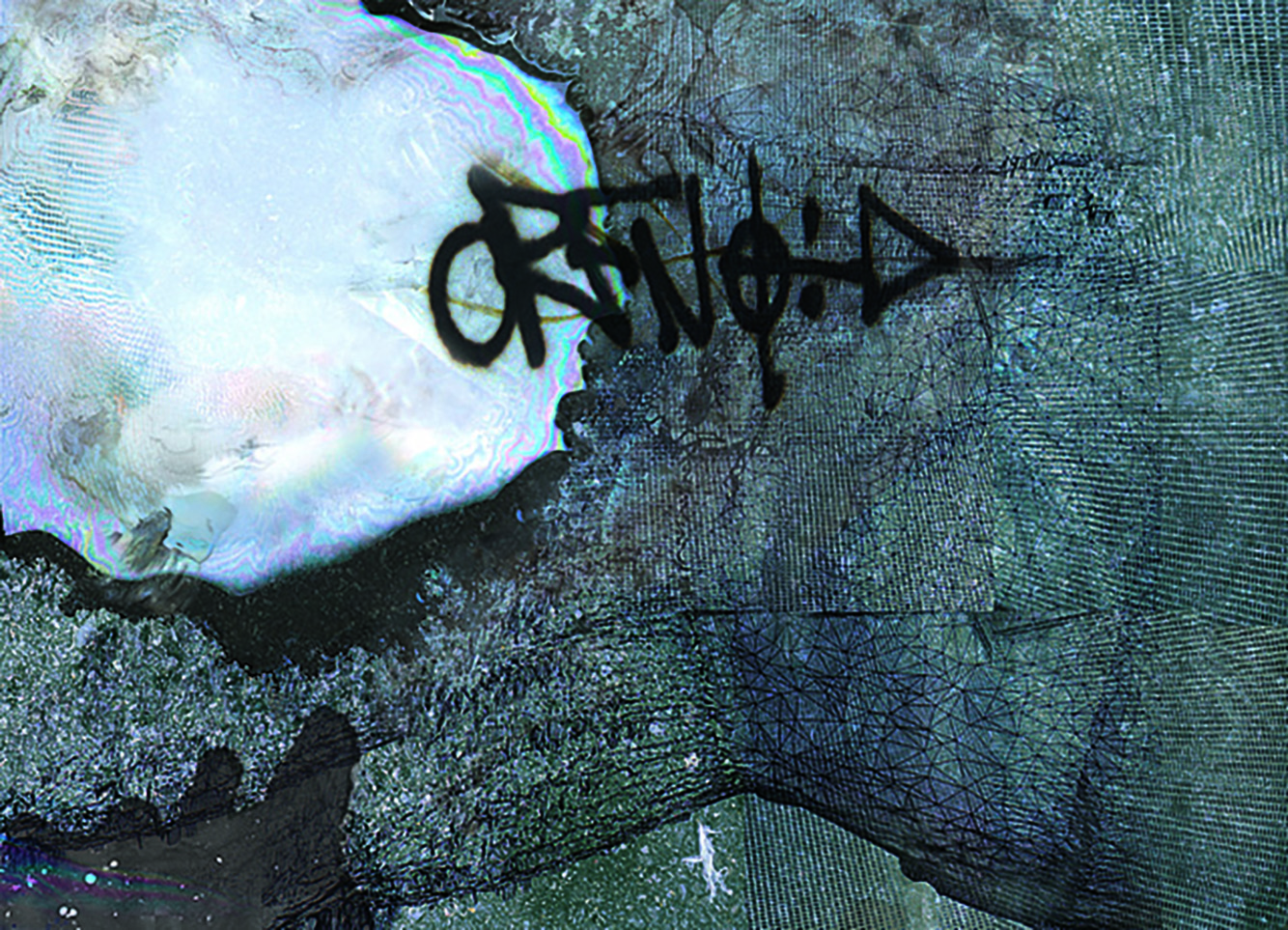
When we had bigger spaces, and four parts of the hive mind could just sort of circulate and overlap and fuse and be in friction, it was really brilliant. I think we also knew there were slight ‘roles.’ For example, Susie was really good at structuring a thing, giving a big skeleton structure, and I tended to just dissolve everything, liquifying all the time. Erle had an incredible affinity with visceral texture. Ranu always inserted the unexpected, images or references from across time and different histories. I think back then it was subsumed or folded into something more oceanic in a way than the way we work now - even though the ocean as habitat for our current fictions, is pervasive. Then it was in reaction to understanding what was happening with Tories running Britain and what was happening in America, and it took longer to realize it was a global clusterfuck.
About the subjectivity, I think there was also paying attention to this slightly weird virtual presence of the 0rphan Drift avatar. The coincidences were endless and very strange. I remember one time Ranu calling me and saying ‘have you seen the van?’- because we all lived near stations on the free train now called the London Overground, one stop between each of the four of us. “Look at the van!” My boyfriend had a van that 0rphan Drift used to move everything around, often parked between my and Ranu’s houses. “Someone wrote ‘0rphan Drift’ on the van.” And it wasn’t exactly. It was a tag, ‘0:D>’ that we saw later all over the place, but I mean, that“s an example of how mad the currents felt when you were in that channel of intuition and attention to multi-dimensional reality. There’s no surprise that for people not living that multi-dimensional way, that kind of thing gets labeled coincidence.
Ido_
You have said that 0rphan Drift wasn’t just an art collective. It was a collective avatar, which is a different thing.
Ranu_
Yeah, I think it is very important. Again this predates all of the ways that avatar is used now. It was a way of thinking about collective energy and operating, making our work as a manifestation of collective energy. And I don’t mean collective, as in just the four and a half of us, or whoever was working with us at the time. But I mean collective as in energy work. Bringing in all of these other forces, the forces of the machines themselves, of the kind of different dimensions that we were bringing into the work. So thinking about the metals the machines are made of, for example, all of the things that go into these things actually have an energy and a force. The avatar was a consideration of what collective production really is.
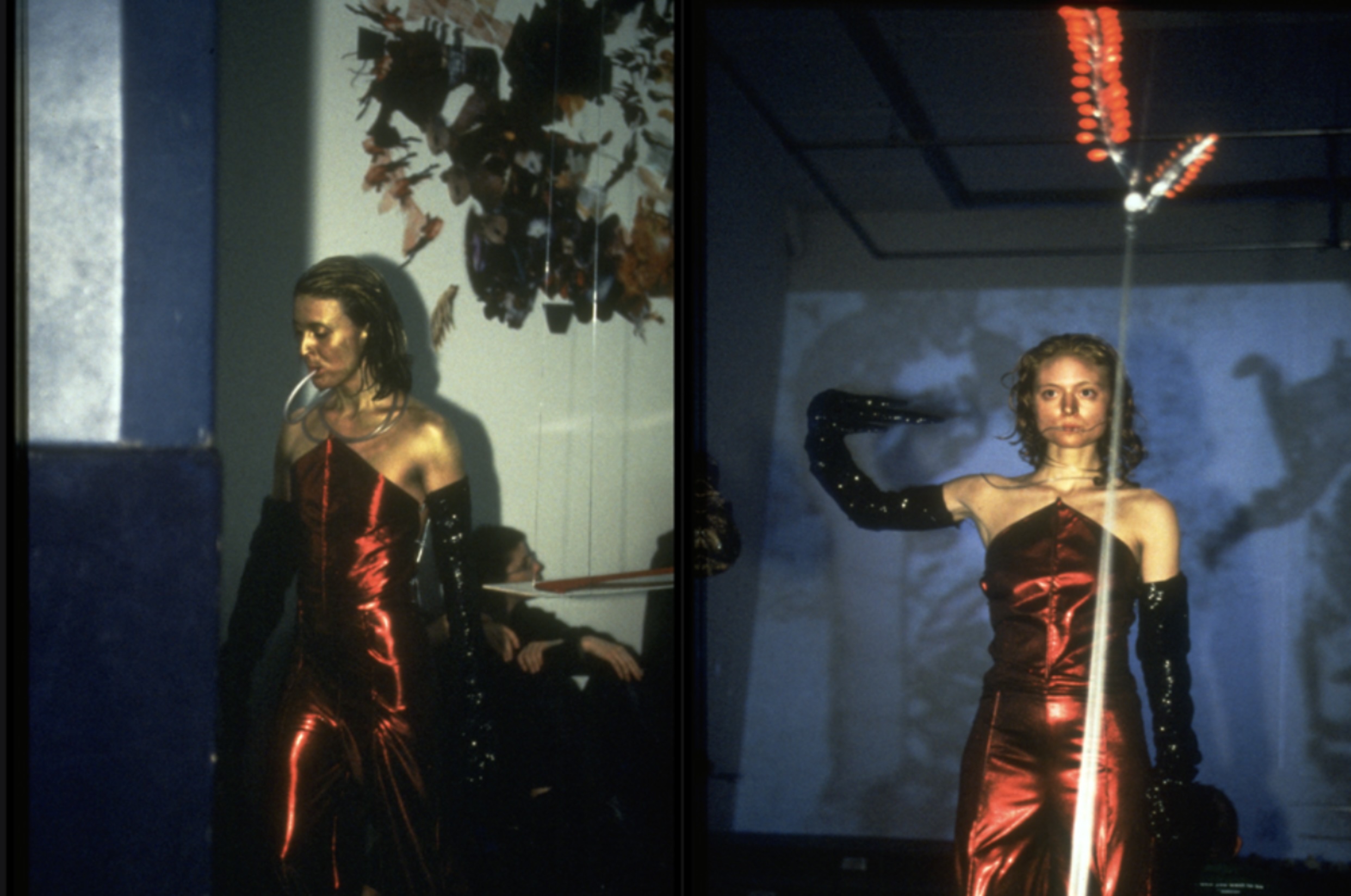
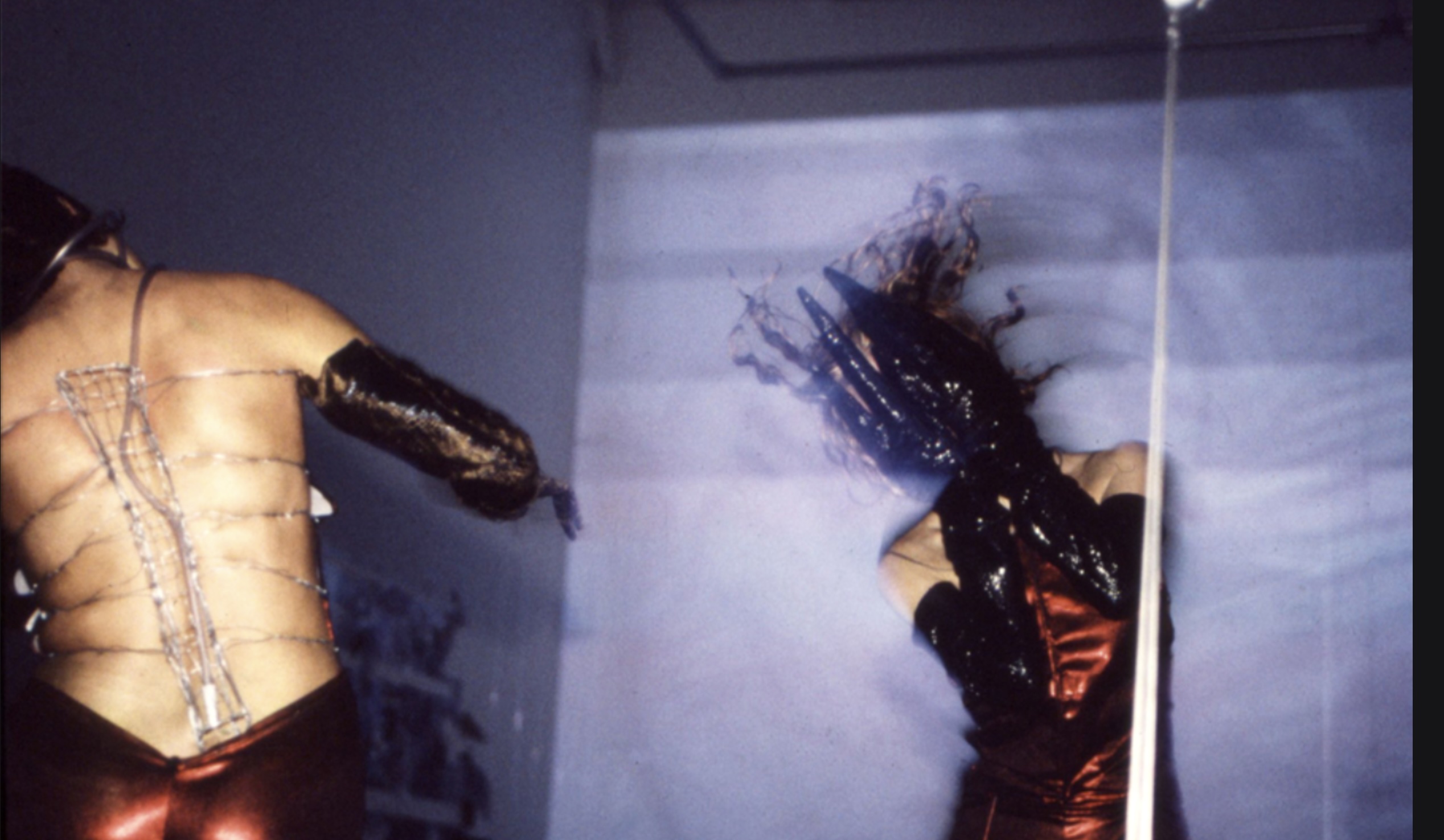
Katak:Xes, 1999, performance (stills), SYZYGY, Beaconsfield Arts, London
We were using the word avatar to really mark that it was part of this information age that was starting, because that word was in the science fiction and also beginning to be in the space of the Internet as the fictional persona that somebody sort of stands inside.
Maggie_
That would bring me very nicely to Syzygy18, which was a culmination in a way of this avatar’s power in manifesting everything Ranu has just been saying in this fiction that was quite a magic space within that collaboration with CCRU.
Basically we had all these things like demons, powers, and summoning tools. And they were absolutely a practical method for having an awareness of different materialities and flows. For example, all the avatars had a blood aspect, a metal aspect, a light aspect. They were a time rider or outside time. They were twins, or number pairs describable on many levels of pressure and melt or…
Ido_
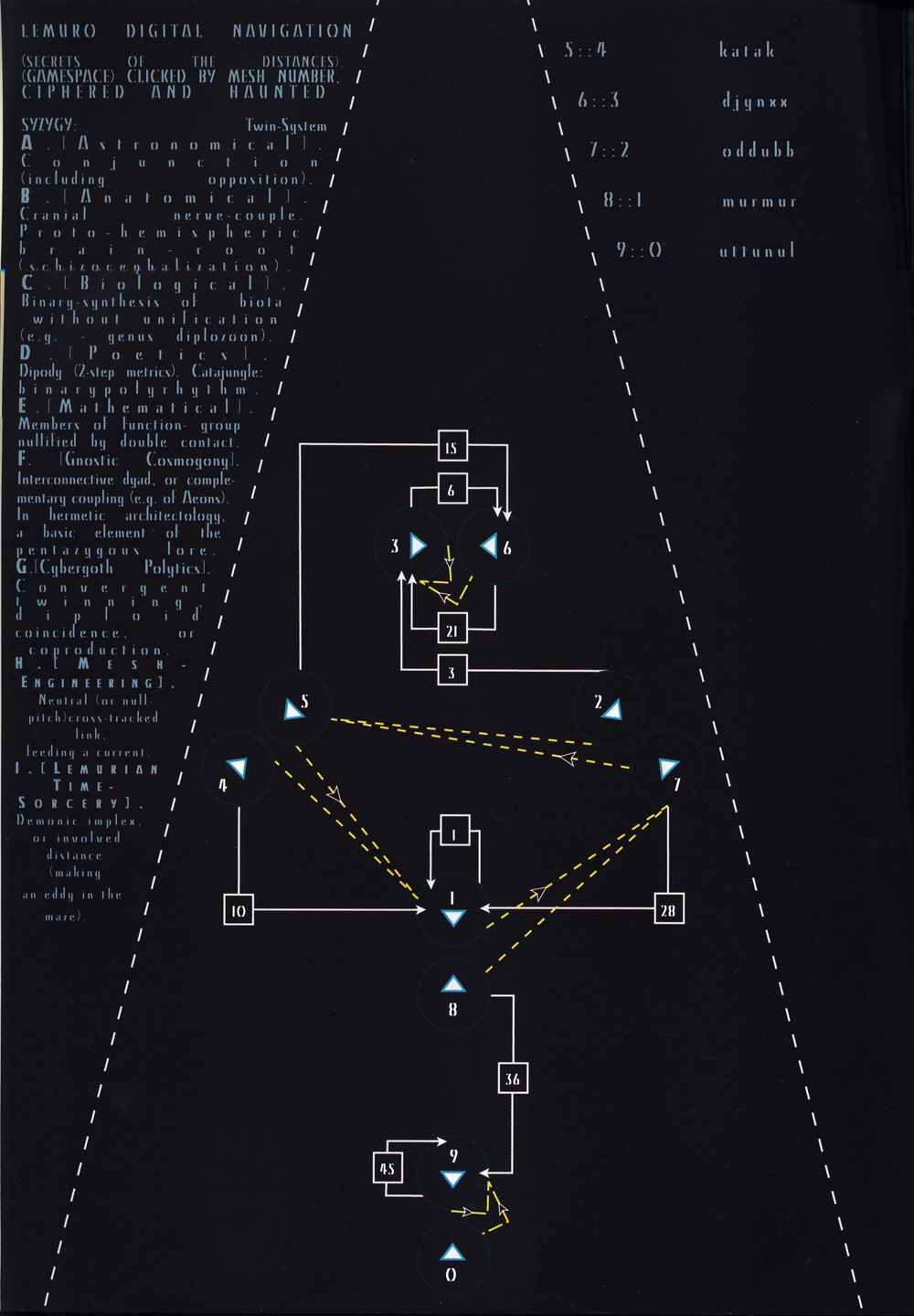
You’re referring to the Numogram19.
Maggie_
Yes, I’m talking about the Numogram. That was CCRU’s name for it. Whenever people ask me to describe the numerology involved, I have no clue, no idea. That wasn’t how we were working. It was like two languages came together to build that Numogram.
In the Katacomic20, the 0rphan Drift stuff is at the bottom of each page on either side of the numbers.
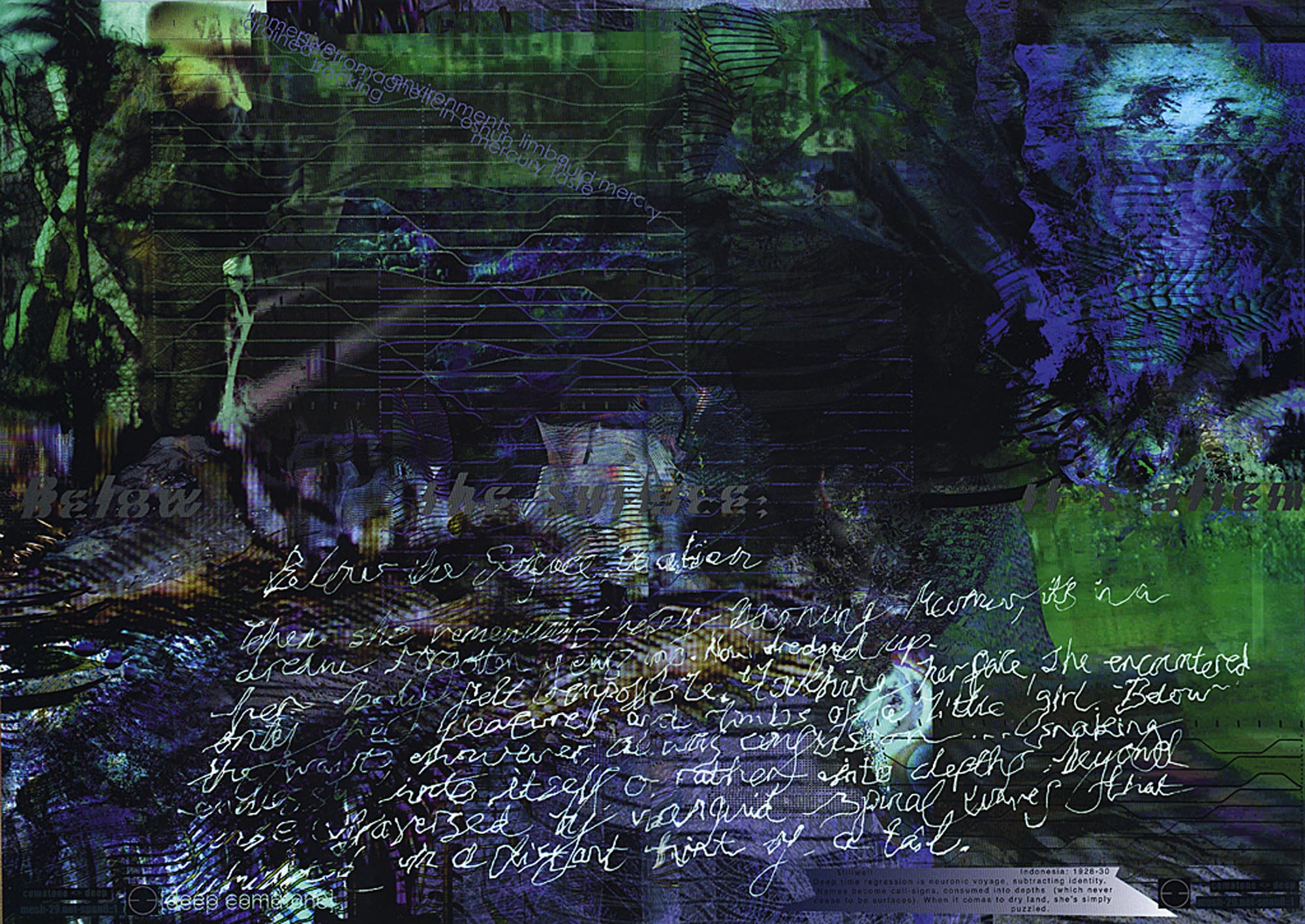
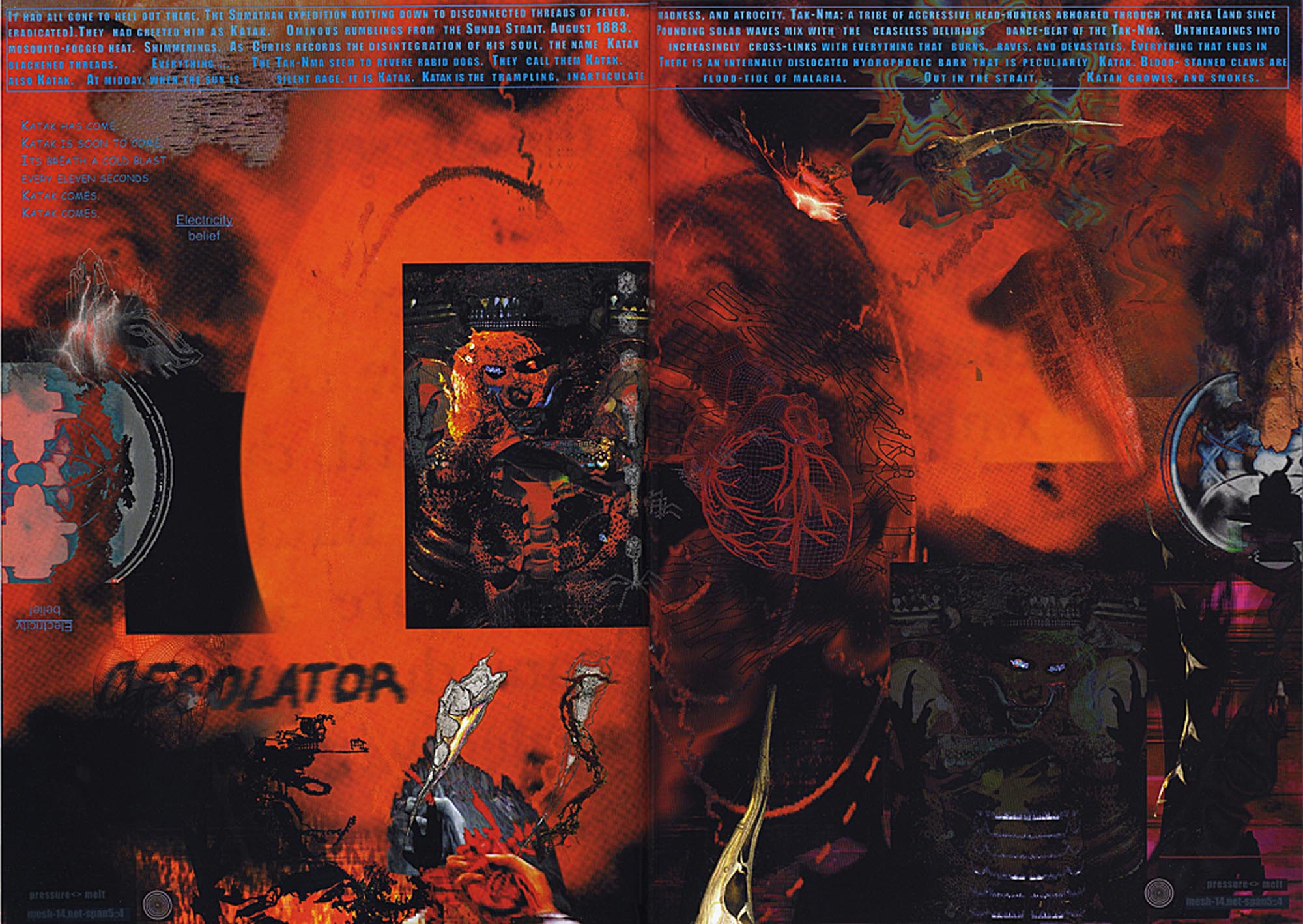
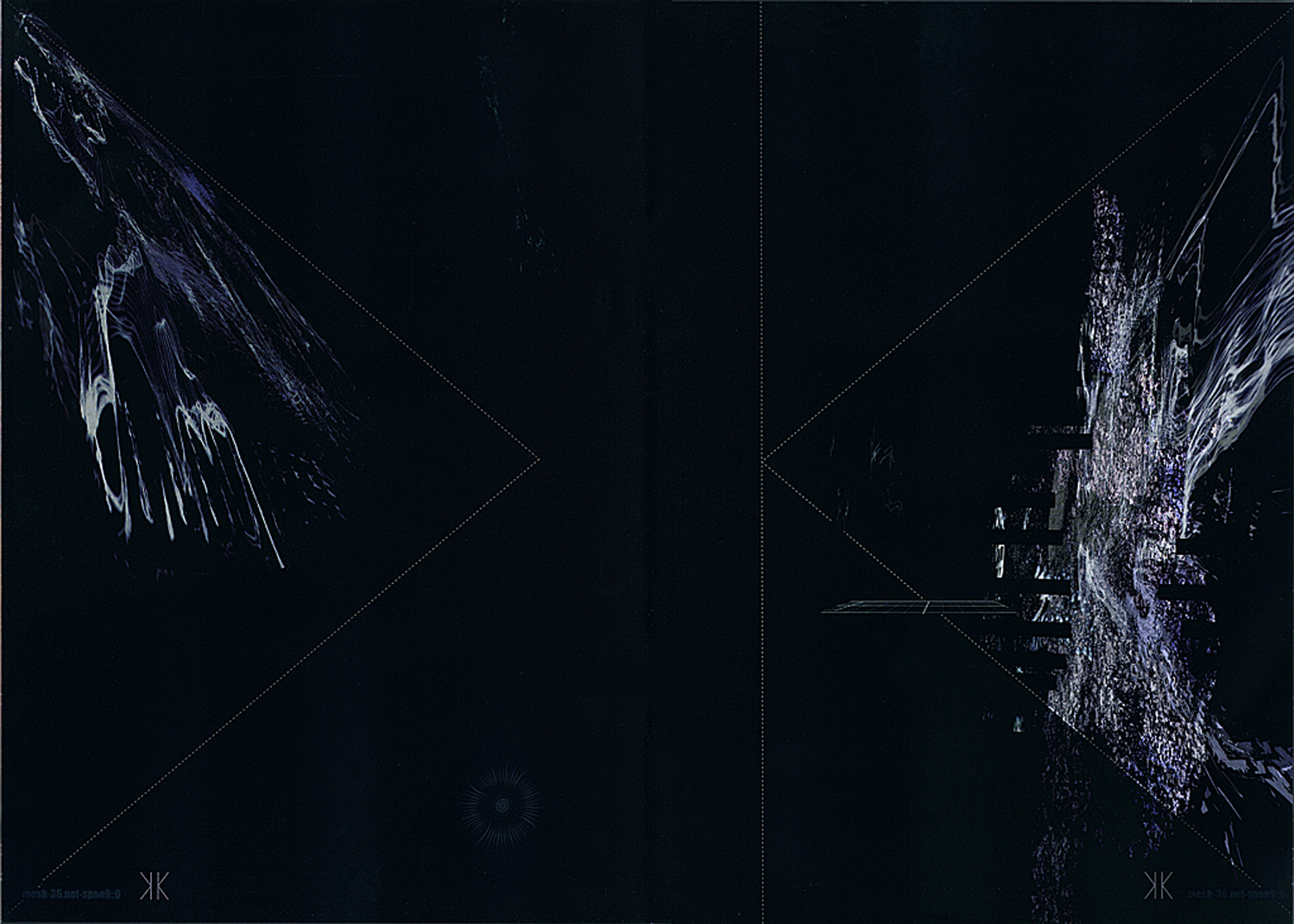
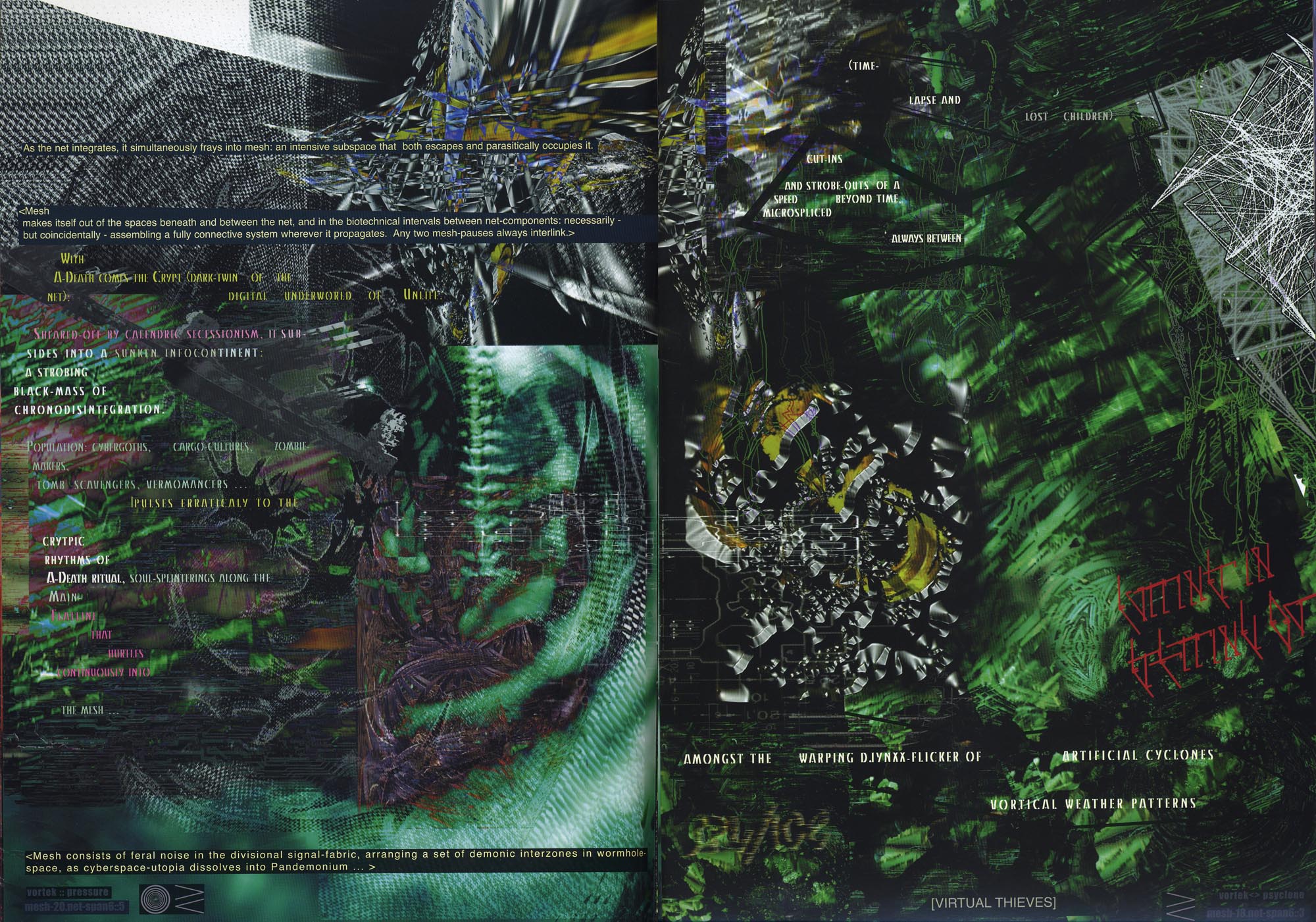
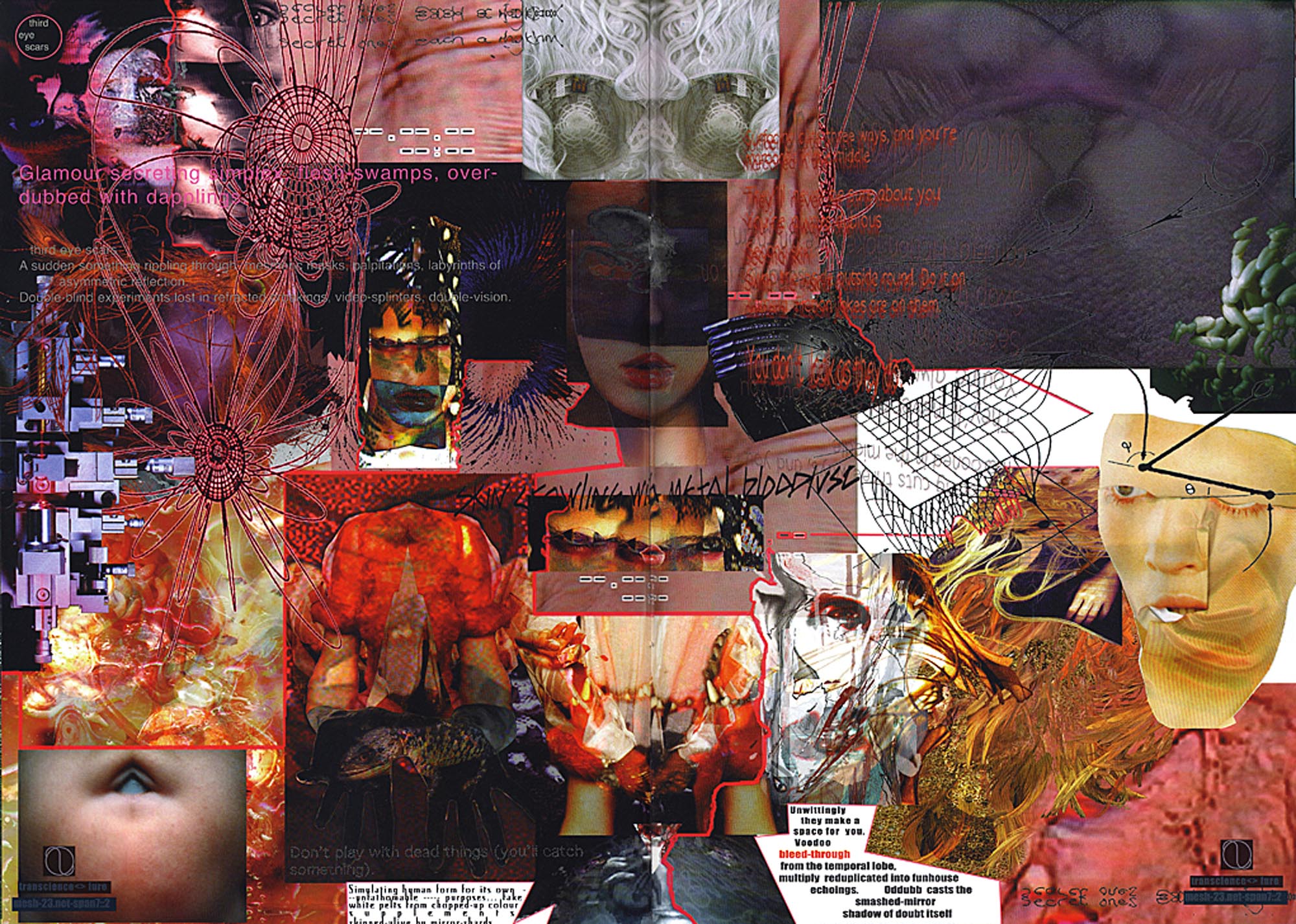
SYZYGY Meshed Katacomic, Avatar pages, 1999, 0rphan Drift and CCRU, Beaconsfield Arts, London
Ido_
Yes, there’s a great deal of writing about these avatars, where you elaborate all of the qualities and aspects of how they’re related to a place on that Numogram diagram. So it came to be via some kind of conversation, numerology aside. And then I know that you made these pretty extraordinary, involved wall collages or installations, one for each of these avatars.
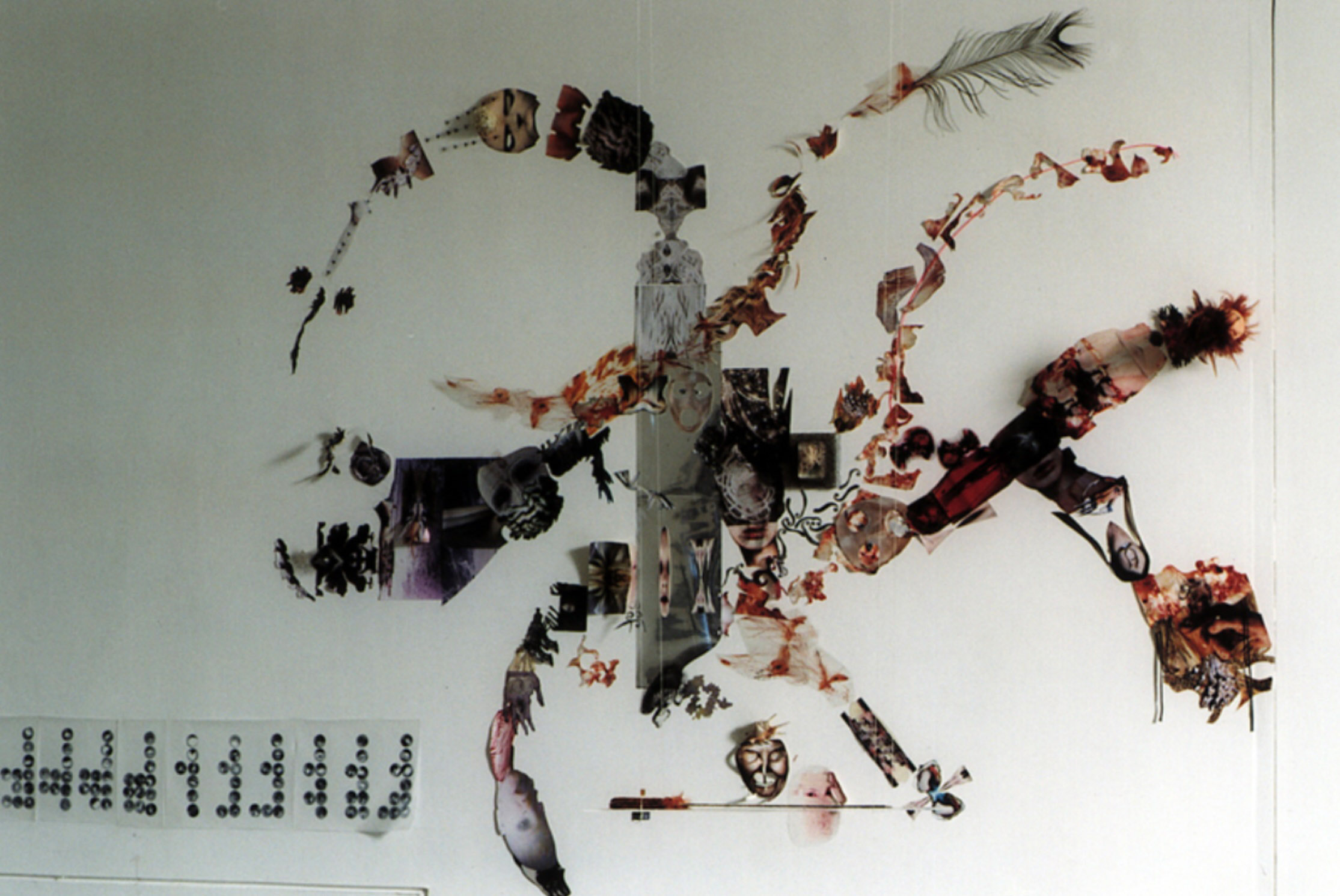
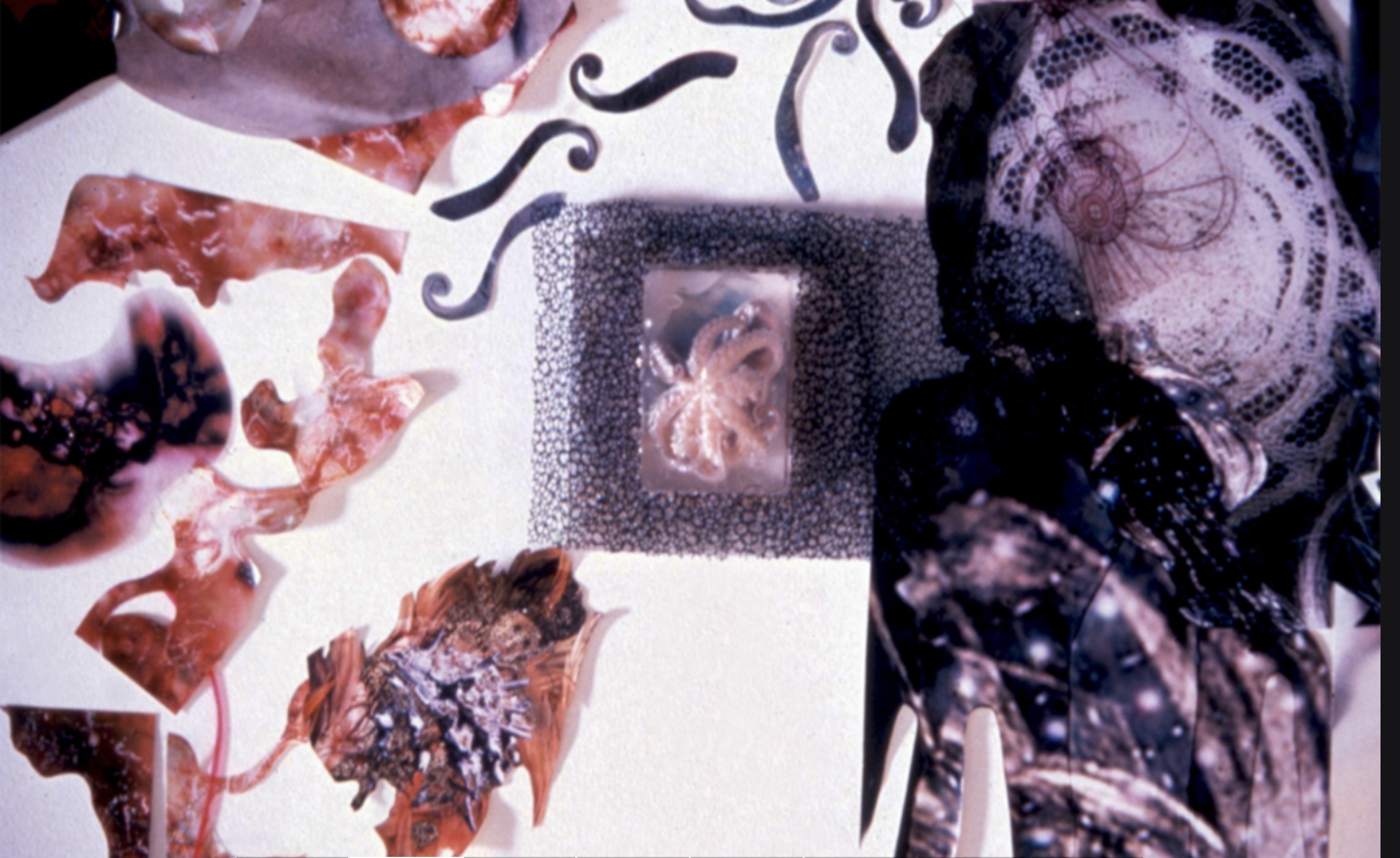
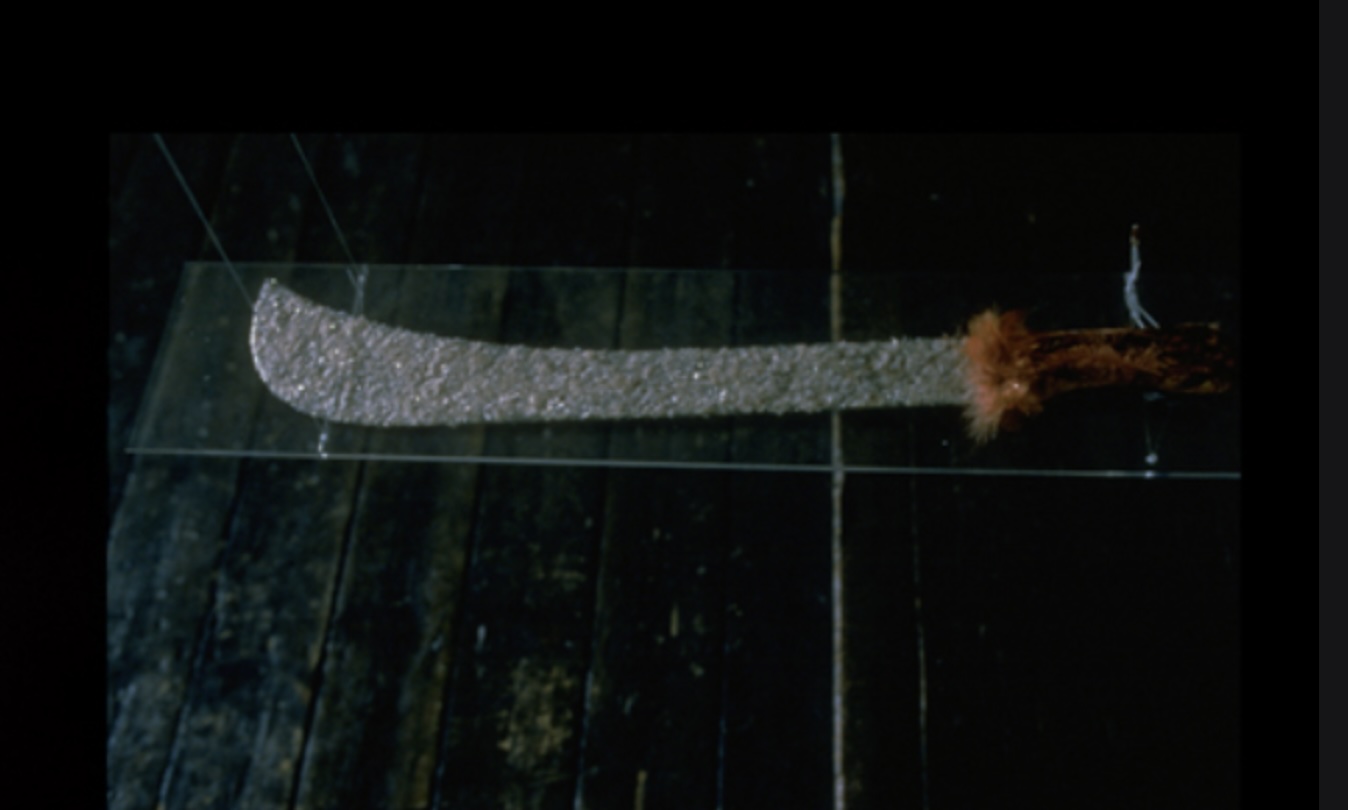
Xes, 1999, collage (color photocopies, photocopies on acetate, octopus in plastic, wig, machete, feathers, glue, pigment, suspended plexi shelf), SYZYGY, Beaconsfield Arts, London
Ranu_
It’s important, the context of that, because it was kind of a fictional response to Y2K. The whole premise of that project was that we were going to make a calendar system. And I think we were two groups modeling different cosmologies during that time. We would describe some sort of characteristics, and then they would be doing this numerology. And the pressure was really intense. It went on for over a year.
And we were drawing on a whole bunch of different cosmologies, but I feel there was also a difference in the way the two groups approached it. It ended up actually creating a lot of fractures in the project. And that’s partially because we had inadvertently come at it from different cosmologies. I felt like we were in some sort of weird cosmological fight, or something.
Maggie_
It came out brilliantly though. Sadly of the era of terrible documentation, pre digital for the most part, pre smart phones.
Ranu_
It was really interesting because we sort of stepped into this cultural mythology about Y2K. And the fact that because of digital clocks everything was going to collapse. Which is hilarious, but also I felt like we’d stepped into and embodied that for a while which was really intense.
I started doing yoga after that.
Maggie_
There was a sense of some sort of dark time for a bit in the late 90s. Our friend John Cussans called it ‘The Dark Haeccity’. I mean, there’s another dark time now that’s way more insane.
Ido_
Yeah, one of the things that’s so notable about 0rphan Drift is that text and language are always an important part of the work and it definitely has a sense of something coming apart, something coming together.
It’s not utopian. It’s not dystopian, but it’s definitely recognizing uncertainties or anxieties about a moment, trying to deal with that in various ways, trying to make a new system to try to deal with something that feels unstable. As though you are building a new system, a new understanding.
Ranu_
Yeah, that’s really important. Yeah, it’s fluid. It was a really dark time. And then also, I think there’s something about the way we stepped into that, I feel it did change me …when we talk about the difference in subjectivity. Now I’m far more protective of myself when I step into toxic spaces. And I think it comes from the fact that we were messing with stuff that was dark, and there were moments…I remember walking into parts of Syzygy, my mom actually came to London and was visiting and came to one of the shows. Our work involved giant video projections and music, spaces where people were dancing. Dark, but also really euphoric, and it had the release of the dance floor available for people who wanted that. And we’d made all these weapons and stuff. So there was definitely a sense of fighting energy in there.
But the CCRU were doing these rituals, including those on the Numogram. And I remember, coming in with my mother and seeing Mark (Fisher) wearing a black suit, and they all started doing this thing, and she just started to cry. And I knew it was because it really felt weird on the level that they really were channeling the demonic in this way. They were taking on that part of the fiction, going through Lovecraft and others. I felt like there was a real cosmological threat. That’s how I felt during that show was that this is actually a battle of global energies that we’d set up.
Maggie_
But then there was other stuff they did. An amazing kathak dancer coming from Jaipur. It wasn’t all demonic at all, and some of the talks were really incredible.
We often wish we’d got better documentation of so much of the work. It was pre smart phones.
I went to the Brixton Voudou market to buy something for cleansing the space to ‘close’ the SYZYGY event. Voudou had inspired so much for us in designing the avatars. The guy said to me, “Don’t mess with this.” And I was kind of “yeah, yeah," and then he swept back a nylon purple curtain and there was a whole shrine with a lot of dead things, including a human skull. We had to put the powder substance I bought in a corner and light it. There was a blue flash, a small explosion and a lot of bright white smoke, smelling of cleaning products, maybe ammonia, drifting through the space.
Ranu_
We were really messing with stuff.
Maggie_
I was thinking as well, there was psychosis, there was drug overdose around us. There was a lot of heavy stuff going on in the periphery. People close to us were taking strain.
Not to sound like a granny, but that thing of being immortal when you’re young is real. I think the responsibility now feels to find positive ways of being and inhabiting and nurturing more hope-filled possibilities, modelling the future rather, because it’s so…. you know, science fiction’s come to meet us in the climate crisis. Hyper objects, world governance, Neoliberal horror, all of its inequalities, all of it’s incoming now. I think in the 90s, though I suppose I thought for a bit that possibly all the computers and human time would shut down, it was more like playing with possibilities, and now it feels like it’s different possibilities that need playing with, and urgently. And now I don’t want to be so dark, which is probably partly age, but also it’s the thing of something being absorbed, and then inhabiting and reperforming it to try to show what it is, which I think was the intention behind a lot of that.
Ranu_
It really worked. But then, what impact does it have on you afterward, you know? So it’s just the thing of being more careful when you’re playing with energy like that.
Maggie_
Yeah.
Ranu_
I mean, I think that we proved to ourselves that it works.
Maggie_
I remember one of the lines in Cyberpositive that was ours. I can’t remember who wrote “a generation addicted to extremity, in order to feel,” and I think whether it was, you know, Tarkovsky films or tragic opera, or different kinds of altered states and stuff that we were playing with exploring taboos alongside, or from 0D work. It felt like if you went with it, immersing in it, that there’s a beauty in the intensity and the excess and the kind of sublime dissolution or something.
There was a lot of stuff on going around us: John Cussans was also playing with a lot of taboos and Philip K. Dick and Bataille. But there were also our compadres like BANK: John Russell, Milly Thompson, and Simon Bedwell. They were complete iconoclasts, and really had this amazing response to 80s and 90s culture and the art world.
Ido_
This question of milieu is important, who you were talking to and working with at the time.
Ranu_
Steve (Goodman)21 and Kodwo (Eshun)22 and Luciana (Parisi)23 were really important.
Maggie_
The CCRU Hyperstition/Numogram fiction was more Nick and Mark (Fisher)24 and Anna (Greenspan), and then Steve and Luciana were different, following more individual paths. They were really in the world, those two.
Ranu_
And those are the people whose work I’ve followed over the years. Luciana and I are good friends now. I got to know her even better after that. She’s at Duke now, but she and Steve were at Goldsmiths together. Kodwo is now half of Otolith Group. He was a really big presence at that time. His book More Brilliant than the Sun25 was really influential. Those are important touch points.
Maggie_
Yes, and I think science fiction writers are some of the other touch points, not my only touch points or for all of us but….
Ido_
I know you don’t really want to talk about rave culture, but it’s come up a couple of times, something about feeling music. And Walter Benjamin writes about cinema, about simultaneous collective reception. There is something, I think, that is related to this collectivity, to being on a dance floor, which you mentioned, to the euphoric.
Maggie_
Susie and I would sit from dawn when we got back from a party, writing, analysing experiences we had in the music, developing a psychedelic method of sorts.
It was also that the dance floor experience, a lot of it was about the derelict, lost, dispossessions of the rampantly galloping capitalist enterprise of regeneration in London. Loads of the places Suzie and I went were squat parties, really interlinked with the whole traveller and reclaiming-the-common-land movements, and some of the stuff that led into the Occupy movement and all of the Reclaim the Streets stuff, all ongoing as well. And this is at a time when laws were being written such that you can’t have more than eight people collect around a repetitive beat, which was partly how breakbeat emerged to defy that law, and was played so much in England. I don’t know what the laws were in the States at the time. But I remember this one guy, I was saying “Oh my god, they’re gonna actually bring in that bill, what can we do?” And he’s just said, “Keep dancing.” Like, you know, that is the resistance, and it does not stop. Rave culture was quite a political agreement amongst us.
Ido_
I’m really glad that you brought that up, the social history of that moment, what it led to, where it came from.
I’m also interested in the sound elements of your video works. When you’re talking about the body and embodiment, and the sound acting on the body.
Maggie_
It’s tactile. It’s almost like vision becoming.
Ranu_
We were trying to make image work like sound in some way.
Maggie_
Multiple different textures and layers and resonances.
Ranu_
And it’s another way of being really time based. You have this physical vibration of sound which is related to energy work, which is related to amplifying the materiality of image. So that image is not seen as just this kind of inert kind of thing. It’s something that is physically engaging. So trying to make this meeting be really physical.
Maggie_
And we had loads of different layers of different kinds of texture, like we’d have super eroded video texture, pixelated stuff from stills and animation, so many different kinds of textures in video, that also is a bit like sound, the different textures in sound. And there was also this Mayan kind of New Age analyst (later shown to be a fraud) who talked about how the Mayan priests were time traveling through vibration, it was affecting their cells or there were all these quasi-fictions around well, I don’t think it is just fiction, because sound healing is a thing. It’s an acknowledged, seriously amazing thing now. But just sound in the body, and having got into that as a much more gentle form of transformation since that period, same as Ranu. That’s loads to do with vibration.
The music was a really intense immersive space. I think that was relevant for the video as well. And trying to replicate or conjure a similar kind of immersion when that’s just like myriad different textures and speeds ongoing in a visual field, more like music.
Ranu_
It was a really important moment when Jungle came into the scene, because I think that it was also about the way that there are multiple rhythms overlayed in the music that were in these frequencies.
And that is an analog to this sort of bodily experience of different layers of time, and that the incoming technology was going toward. It was clear that that was going to complicate that sort of thing that we already were doing anyway, but that particular move where you have a very slow rhythm happening along with a very, very quick one at the same time, and they’re sort of still together in the music. It’s not always fluid or it’s like fluid, and then it becomes jarring, moving in and out of fluidity that was a huge part of our aesthetic, and a part of the experience of being connected to the beginning of that music coming up. And obviously Kode9 who we collaborated with a lot, who Maggie last played for in London in 2022, came out of all of that that kind of sound production.
I think it came out of an aesthetic that was in all of our work a bit, anyway. I remember this beautiful thing about how something is understood as real but you also simultaneously know it’s a fiction, because it’s kind of raw or awkwardly put together. And yet, even though it’s like pixels on a screen or cut-ups or cut outs, you still have this sense of magic and immersion, and it was just holding that thing together in attention that’s kind of exquisite and painful. That’s one of my favorite feelings.
Ido_
I wanna go back to Syzygy. I noticed in Meshed Katacomic for the 1999 collaboration that that’s the first time that the word Hyperstition26 was defined.
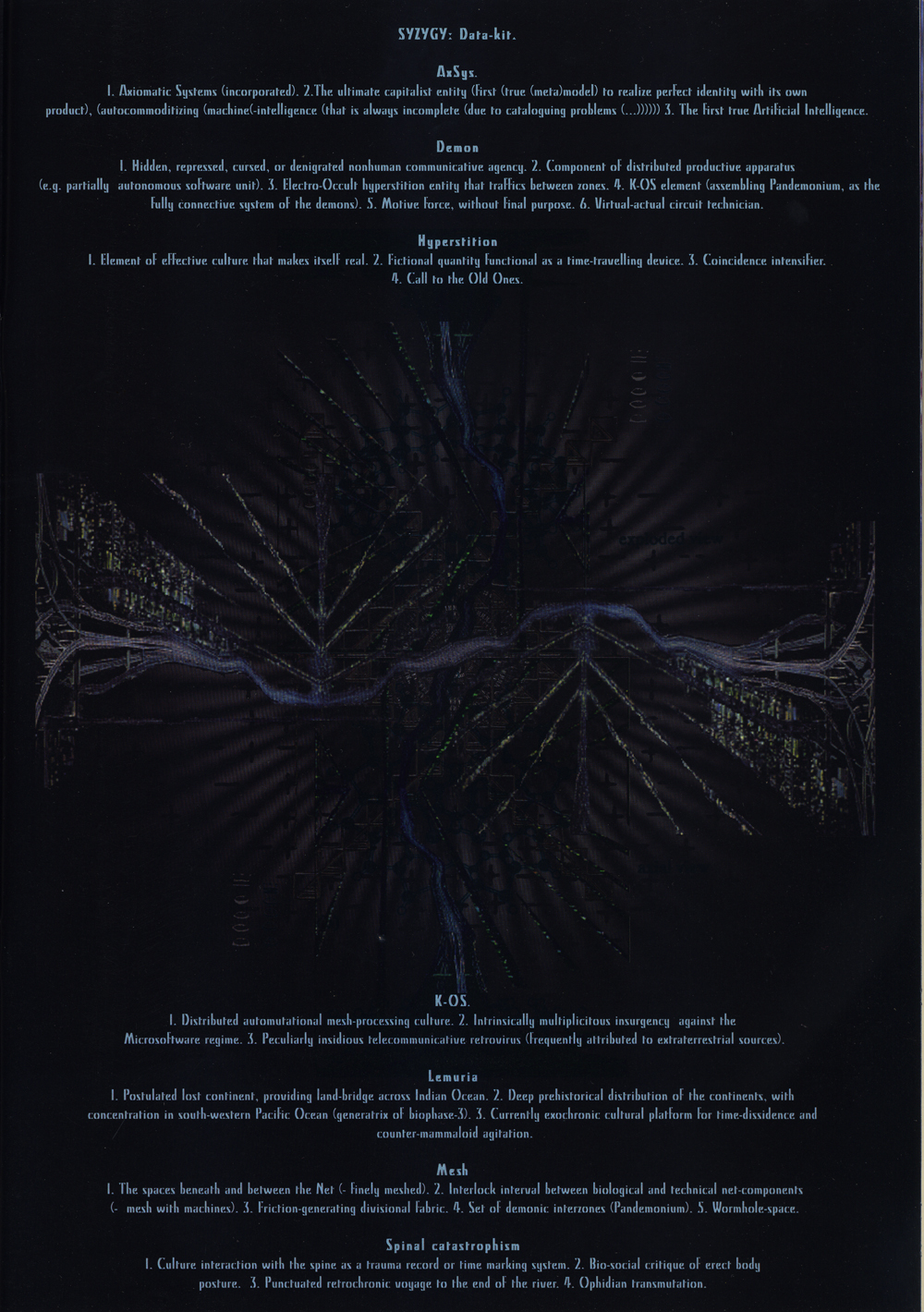
And so going back to that moment. You had described competing cosmologies and so forth. But I figure in the beginnings of planning for that exhibition, there must have been a lot of conversations going on and in them, elaboration of these neologisms that are shaping the way you’re thinking about things.
Maggie_
Nick was the neologist in that way. He was a word crafter of the spliced, of mismatch and fused. Of course, as part of a collective…the CCRU were as close knit in their work time spent together. And all those of us spent a lot of time working out what Syzygy and all of these concepts would be.
Ranu_
We had been thinking for years about how the future impacts the present. I think we should just say that in a really simple way that the direction of the work was always that the future is arriving, and so their arrival of the future was this sort of direction that the work is taking or is inhabiting.
But I think a lot of those words came out of that process. We were sitting around together in groups and talking about what was coming, and what were the things that were going to collapse. This idea of time crises was one people falling into this sense of not knowing, time, chaos.
So thinking about Y2K. Is this collapse? Hyperstition is one of the words that the Ccru developed through this process. And then consequently the Ccru developed a whole series of pamphlets including one on Hyperstition.
Maggie_
Yeah, and different parts of future, impacting at different speeds as well.
Ranu_
And they were all really wedded to this idea that philosophy lives in the world, the idea that philosophy is a practical tool.
Ido_
And Cyberpositive is written about as a work of philosophy. And that’s absolutely the case, as abstract as it is, it is this elaboration of a philosophy in a really important and interesting way.
Maggie_
And part of it is a philosophy of those frictions in collaboration, and also a philosophy streaming out of the dance floor in a way, and out of science fiction. And I think I felt like we had a lot of agency at that time, and just felt really quick.
We’ve embraced so many different moves the evolution in our lifetimes with technologies as they’ve been incoming and in a way it’s just occurring to me that I was incorporating into my own work newer technologies, using glitch and deep dream Inceptionism images and Lidar and all sorts of things to kind of trying to disrupt image surface and space and tactility etc. as we had done always with other forms.
Miasma, 2018, single channel HD video, RT 16:13, Maggie Roberts AKA Mer
But when it came to AI, Ranu, you had been in the Bay Area, had been saying to me for a while like this stuff is not utopian, you know. Not that I was thinking it was utopian, but she was a bit ahead of me in understanding that this is not this kind of mythic thing, AI, but actually intentional human data set encoding decisions. And we together really thought we actually don’t want to be collaborating with this thing. What else could it be?
If AI were Cephalopod, 2019, 4 channel HD video installation, 2 projection, 2 flat screens, RT: 11:00
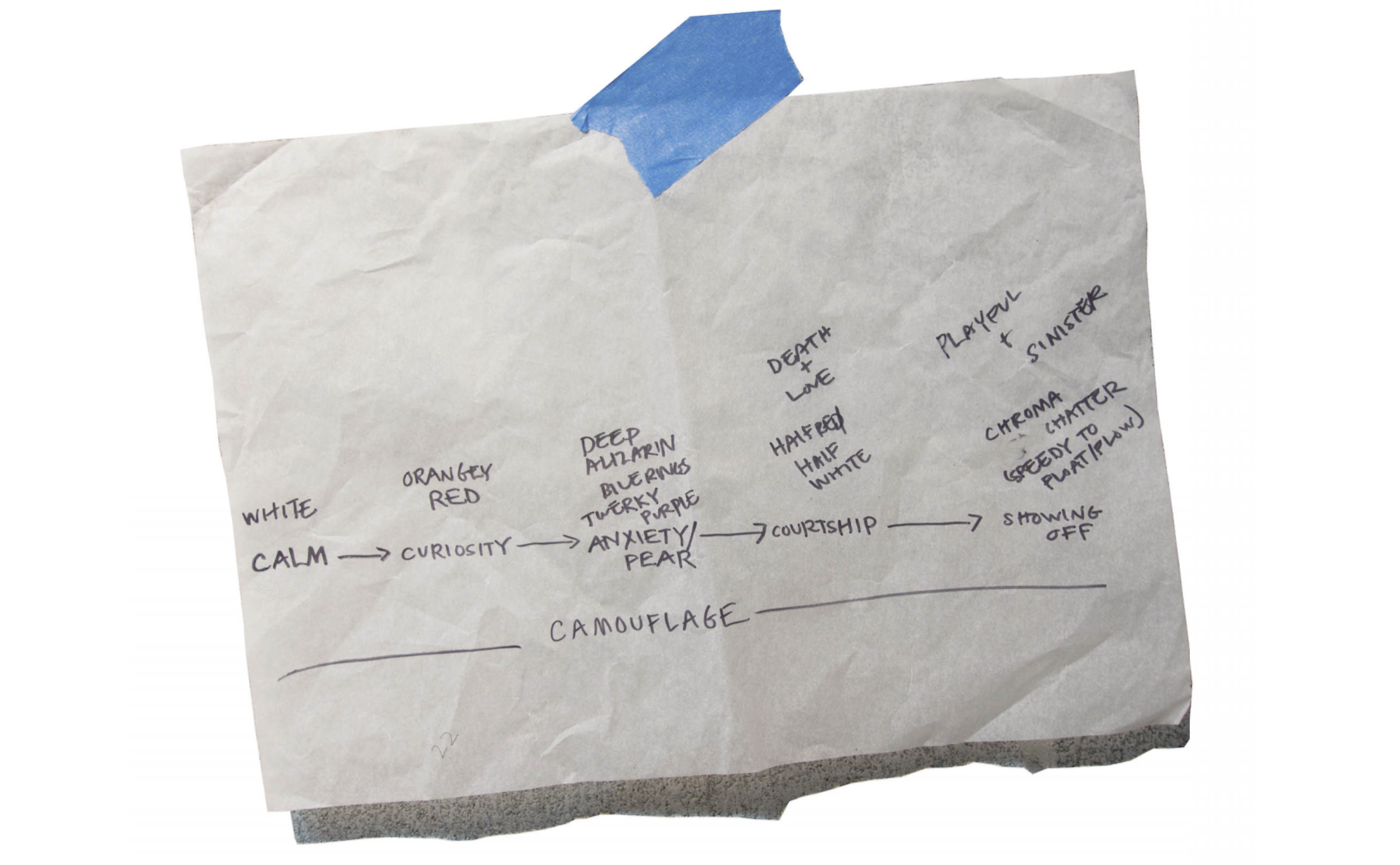
Part of what has triggered all of our Octopus AI work is this: what else could this thing be? There’s no accountability for it. And there is this kind of mythology of dystopia, this dystopian vibe of the machinic against the positive. There is a show called AI: More Than Human27 which Suzanne Livingston from CCRU, who’s a good friend of ours now, co-curated, with Maholo Uchida.
That show is a real friction between the kind of Eurocentric fear of the other in the machinery and the Japanese absolute embrace as a practical companion and fiction and amazing resource for avataring. Two really different viewpoints. And then the super dystopia that was the massive shocks of how stuff like face recognition and deep fake, and all of the stuff that was generated in the States, and has now kind of moved over everywhere else. It was a great show, but I think that sense of questioning or beginning, all of it was beginning to dawn on all of us. How can we actually, as artists, shift the conversations around this most prevalent thing in our culture?
Ido_
Come to 2022 0rphan Drift, and thinking about your project of training an artificial intelligence on an octopus instead of human selected data sets fed into computers. I know that you’ve talked about how this goes back to the body, about the skin of the octopus as a sensory and also a communicative organ.
Maggie_
Well, ISCRI is actually on pause at the moment, because, as I’ve been talking to a lot of funding bodies recently and as artists trying to work with AI at that level rather than working with already established AI, the funding needed to develop an algorithm that is radically different, is huge. We’re building a website to document all the amazing conversations with the Serpentine Gallery’s Creative AI Lab team, Eva Jager and Alasdair Milne, our collaborative designing with ai consultancy Etic Lab, and some of the artworks we produced for the project.
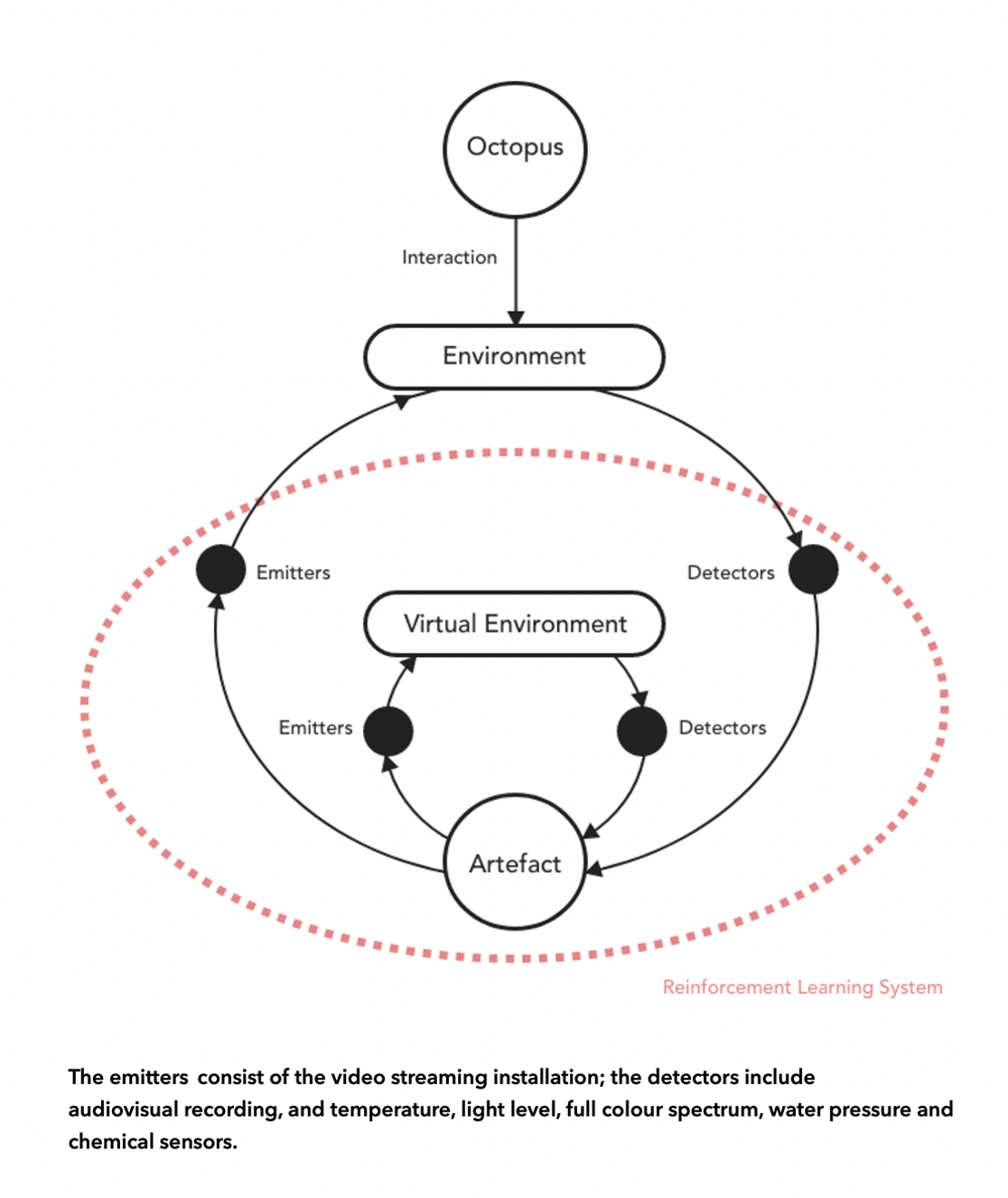
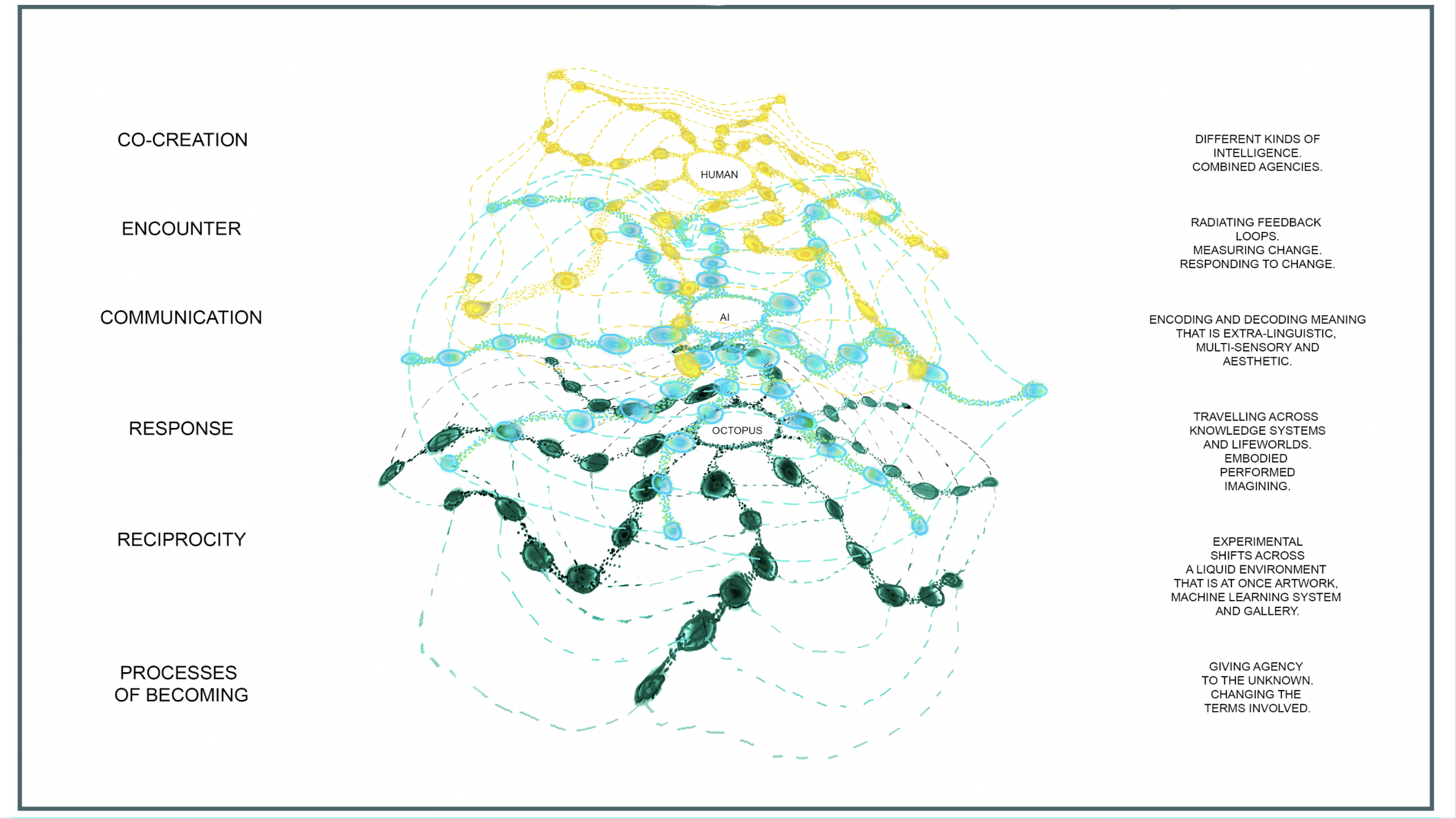
ISCRI showreel, 2020-2022, animation and visual coding prototypes by the 0rphan Drift art team for ISCR (0rphan Drift and Etic Lab, partnered by the Serpentine Gallery, London's Creative AI Lab)
https://iscri.ai/
We’ve kind of redirected our energy onto a piece that we’ve been developing in parallel for two years or so, called Nine Brains. And it’s becoming really interesting. It’s been a massive learning curve in the dark, and it’s actually very amazing to be in that position.
When we started off, it was going to be nine animations talking about different kinds of traits or somatic tendencies an octopus has that could be configured or mirrored in AI space like, for example, build, camouflage, protect, distributed consciousness, color as language. But it’s turned into a complex fiction. We’re writing to each other at the moment.
Ranu_
Yeah, it’s funny to revisit all the old methodologies. For the first AI piece, If AI were Cephalopod28, we were able to be in the same place to work. That was a really self contained work.
Then moving that work into the next piece that felt like it needed to elaborate. We went back to those methods and started with this idea that there are eight arms, let’s make eight different avatars out of the arms, and it totally didn’t work. We started working and then both of us thought: this is feeling like a job. This isn’t feeling right. Or where’s the connective tissue, or something like that.
And then we just started writing more fictionally, storytelling, and thinking how would this be if it was actually in VR or AR, or something because maybe it needs to move into that kind of medium. But right now, we’re actually writing. We have got back to the most basic technology we have for the virtual.
Ido_
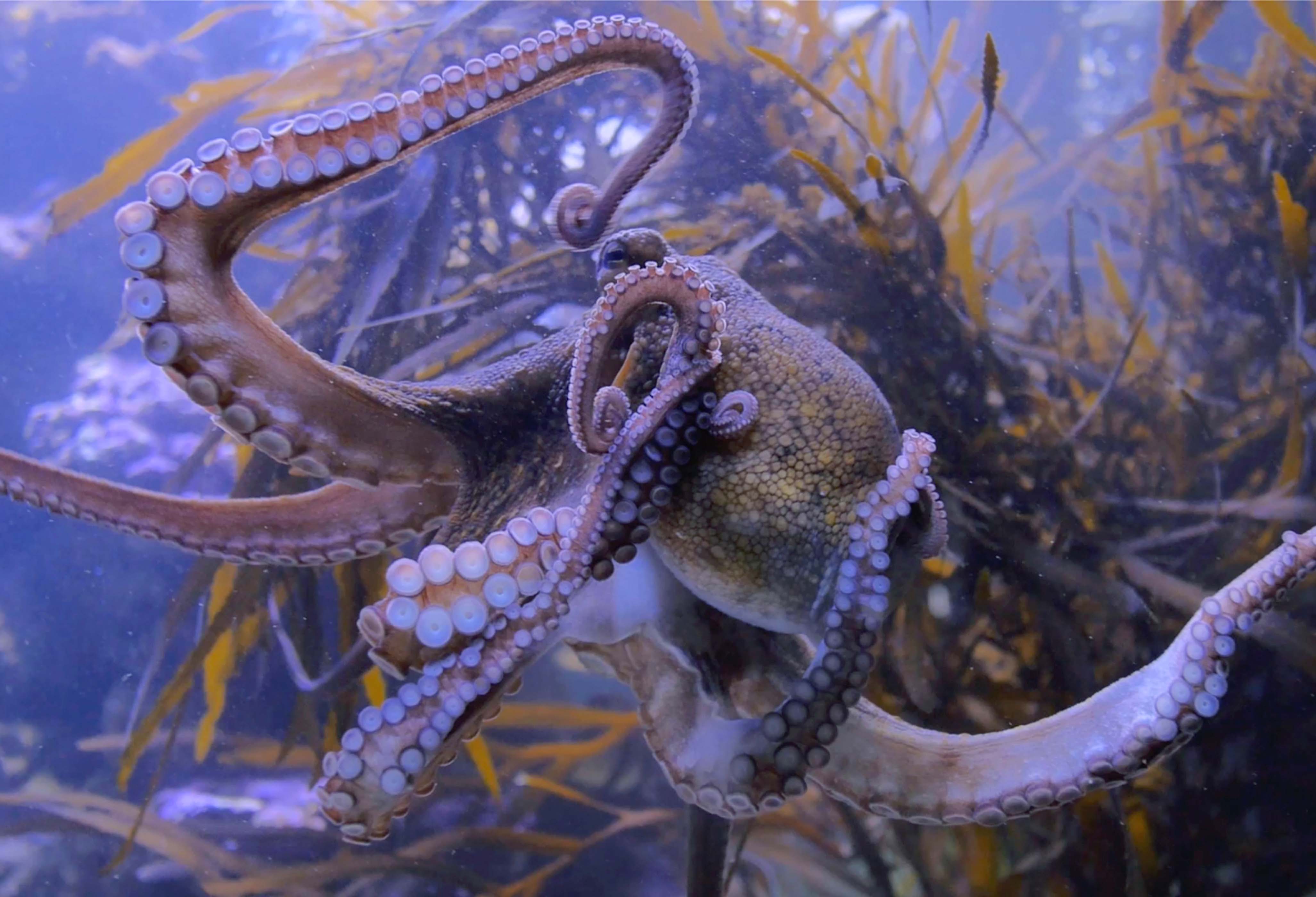
I very much appreciate fiction being an important practice, an opening to an outside or to a future. I also have this line stuck in my head from your work, If AI were Cephalopod, about them being, “curious, plastic, and opportunistic,” which to me is also not unlike 0rphan Drift as a whole, which I really quite love.
*
This conversation initially took place in April 2023 and was revised and supplemented for publication in 2024
1 The Cybernetic Culture Research Unit (CCRU) was a cultural theorist collective formed by Sadie Plant in 1995 at Warwick University, England. Originally it was a cyberfeminist research group. CCRU activities continued until 2003, well after it had separated from the university. Key figures in addition to Plant were Nick Land, and her students Anna Greenspan, Mark Fisher, Luciana Parisi, Suzanne Livingstone and Steve Goodman. CCRU is known for an idiosyncratic form of what came to be called "theory-fiction." Their works were heavily influenced by Gilles Deleuze and Felix Guattari’s Anti-Oedipus and A Thousand Plateaus as well as works by Friedrich Nietzsche. Their theory-fictional writings drew on cultural sources including cyberpunk speculative fiction (William Gibson and Neil Stephenson), Gothic horror (H.P. Lovecraft), and interpretations of various esoteric traditions.
2 In 1994, Netscape introduced the first web browser that made surfing the world wide web possible for average users, and it was an instant success. It was originally named Mosaic, but renamed the Netscape Navigator. At the time it was the dominant browser in terms of usage share.
3 https://www.orphandriftarchive.com/becoming-cyberpositive/cyberpositive/
5 See above. Simon Reynolds, “Seeing the Beat: Retinal Intensities in Techno and Electronic Dance Videos,” Festival catalog for Internationale Kurtzfilmtage Oberhausen (Oberhausen International Short Film Festival), 2001.
6 VNS Matrix was an Australian feminist artist and activist collective credited with early use of the term cyberfeminism. Artists Josephine Starrs, Julianne Pierce, Francesca da Rimini and Virginia Barratt produced work from 1991 to 1997.
7 Unruly City was first shown in an exhibition of the same name at Dold Projects, Sankt Georgen in 2016.
9 David Burrows and Simon O'Sullivan. Fictioning: The Myth-Functions of Contemporary Art and Philosophy. Edinburgh University Press, 2019. p. 300.
10 Possession (1994), performance lecture at Royal College of Art, London as part of a lecture series called Out of Control. It was 0rphan Drift’s first vocal performance work, and performers spoke through a vocoder, confusing the voice of the human with the voice of the machine.
11 Neuromancer (1984) is a cyberpunk novel by William Gibson.
12 This talk is archived on YouTube at https://www.youtube.com/watch?v=N0jX1Qh2Hwo&t=525s
13 Maya Deren, Divine Horsemen: The Living Gods of Haiti. London: Thames & Hudson, 1953.
14 Shadowtime, 2015, neologism
Origin: Ranu Mukherjee, Alicia Escott, Field Study #009 Participants, California 2015
Bureau for Linguistical Reality
https://bureauoflinguisticalreality.com/portfolio/shadowtime/
15 Leah Gordon is a British artist, filmmaker, curator, and writer who makes work on the intersectional histories of the Caribbean plantation system, the Trans-Atlantic Slave Trade, the Enclosure Acts, and the creation of the British working-class. Gordon is co-founder of the Ghetto Biennale along with artist Andre Eugene.
16 Pat Cadigan, Synners. Hardwired, 1999.
17 SLIK for Century City Exhibition, Tate Modern, London, 2001.
18 Syzygy, was an installation and series of five performances at Beaconsfield Arts London in 1999. 0rphan Drift collaborated with the CCRU on the project.
https://www.orphandriftarchive.com/becoming-cyberpositive/syzygy/syzygy2/
19 The Numogram is an invention of the Cybernetic Culture Research Unit. It’s a diagram with numbered nodes in a structure that appears to be related to that of the Tree of Life of Kabbalah. https://www.orphandriftarchive.com/becoming-cyberpositive/syzygy/ccru-and-abstract-culture/
20 Meshed was a publication produced in 1999 in an edition of 100 in collaboration with the CCRU on the occasion of the exhibition Syzygy at Beaconsfield Arts London. “Katacomic” was the 0D term for “a warped graphic novel.”
21 Steve Goodman, who works under the name Kode9, is a Scottish electronic music artist, DJ, and founder of the Hyperdub record label.
22 Kodwo Eshun is a British-Ghanaian writer, theorist and filmmaker. Eshun and Anjalika Sagar are Turner Prize nominated artist duo the Otolith Group. He teaches at Goldsmiths, University of London, in the Department of Visual Cultures. Eshun was a major contributor to the work of the Ccru in the 1990s.
23 Dr. Luciana Parisi’s research lays at the intersection of continental philosophy, information sciences, digital media and computational technologies. Her writings investigate technology in terms of ontological and epistemological possibilities of transformation in culture, aesthetics and politics. Her publications address the techno-capitalist investment in artificial intelligence, biotechnology, nanotechnology to explore challenges to conceptions of gender, race and class. She has also written extensively within the fields of media philosophy and computational design in order to investigate metaphysical possibilities of instrumentality. She was a member of the CCRU (Cybernetic Culture Research Unit) and currently a co-founding member of CCB (Critical Computation Bureau). She is Professor of Literature at Duke University.
24 Mark Fisher, who blogged under alias k-punk, was an influential English writer, music critic, political and cultural theorist, philosopher, and educator. He is well-known for his book Capitalist Realism: Is There No Alternative? (2009) and founded the publishing imprint Zero Books, later Repeater Books.
25 Kodwo Eshun, More Briliant than the Sun: Adventures in Sonic Fiction. London : Quartet Books, 1998.
26 “Hyperstition is a positive feedback circuit including culture as a component. It can be defined as the experimental (techno-)science of self-fulfilling prophecies. Superstitions are merely false beliefs, but hyperstitions – by their very existence as ideas – function causally to bring about their own reality. Capitalist economics is extremely sensitive to hyperstition, where confidence acts as an effective tonic, and inversely.” Nick Land interviewed by Delphi Carstens for “Hyperstition: An Introduction,” 2009. Carstens also writes, “Hyperstition is a neologism that combines the words ‘hyper’ and ‘superstition’ to describe the action of successful ideas in the arena of culture. Akin to neo-Darwinist Richard Dawkins’ concept of memes, hyperstitions work at the deeper evolutionary level of social organisation in that they influence the course taken by cultural evolution. Unlike memes, however, hyperstitions describe a specific category of ideas.”
27 AI: More than Human exhibition at Barbican Centre, 2019
28 If AI were Cephalopod was a multi-channel video installation by 0rphan Drift presented at Telematic gallery in San Francisco, May 4 – June 8, 2019.
Biographic Notes
Artist avatar 0rphan Drift came together in the mid 1990s in London. Their works in video, collage, installation, and in publications such as the epic book Cyberpositive for their first show at Cabinet gallery presciently foreshadowed the coming reconfiguring of social and perceptual space via the nascent internet.
The collective has taken diverse forms through the course of its career, sometimes changing personnel and artistic strategies in accordance with the changing exigencies of the time. Now co-channelled by co-founders Maggie Roberts and Ranu Mukherjee, it operates from London, San Francisco and Capetown. In recent years, 0rphan Drift has been considering Artificial Intelligence through the somatic tendencies of the octopus - as a distributed, many-minded consciousness.
https://www.orphandriftarchive.com/
Ido Radon is an artist and writer who grapples with abstractions that structure the social real even as they remain nearly impossible to figure. Recent works focus on technologies and infrastructures (hard and soft) that mediate contemporary life. Selected solo exhibitions include those at Air de Paris (Paris), Afternoon Projects, (Vancouver), Et al. (San Francisco), Romance (Pittsburgh), and Veronica (Seattle). An autodidact, she holds an MFA from the University of British Columbia. With family and friends, she makes SOCIETY.
https://idoradon.com/
Issues
A Zoom Conversation between Ido Radon, Maggie Roberts and Ranu Mukherjee, with Stanton Taylor took place in July 2024 in the framework of:
For the exhibition #c0da comptoir #fanny carolsruh at Badischer Kunstverein, Karlsruhe c0da was transferred to an exhibition space for the first time. It situated the project in a complex relationship to the Fächerstadt (‘fan shaped city’) of Karlsruhe as a rather maledominated technology centre and proposed feminist correctives to this existing historiography. During the 18th and 19th centuries, the fan was a telegraphic tool, part of the basic equipment of bodies that were coded as feminine, and was scenarized in literature and art as an instrument of emancipatory and subversive communication.
Related contributions
Syntax creates a different breath
Script for a Lecture Performance
software warfare
EX PONTO BITCHES
Traitors in the Machine
Notes on Speculative Feminism, Science Fiction, and Translation
Linkbase